Crochet Tools, Hooks & Yarn: A Beginner's Buyer Guide
New to crochet and staring at a wall of hooks and yarn wondering what you actually need? This guide keeps it simple. We'll cover the few essentials to start, how to choose the right hook and yarn (and match them), which extras are worth it later, and roughly what it all costs — so you can buy smart and get stitching.
Updated July 2026 · 10 min read
What do you actually need to start crocheting?
Here's the good news nobody tells beginners: crochet is one of the cheapest crafts to start. No machine, no big kit, no expensive setup. A hook and a ball of yarn and you're basically in business.
Everything else you'll see in a craft store is optional — useful later, sure, but not something to buy before you've made your first chain. So ignore the overwhelm. Grab the essentials, start stitching, and add tools as you actually need them.
The absolute essentials
| Item | What to get | Why you need it |
|---|---|---|
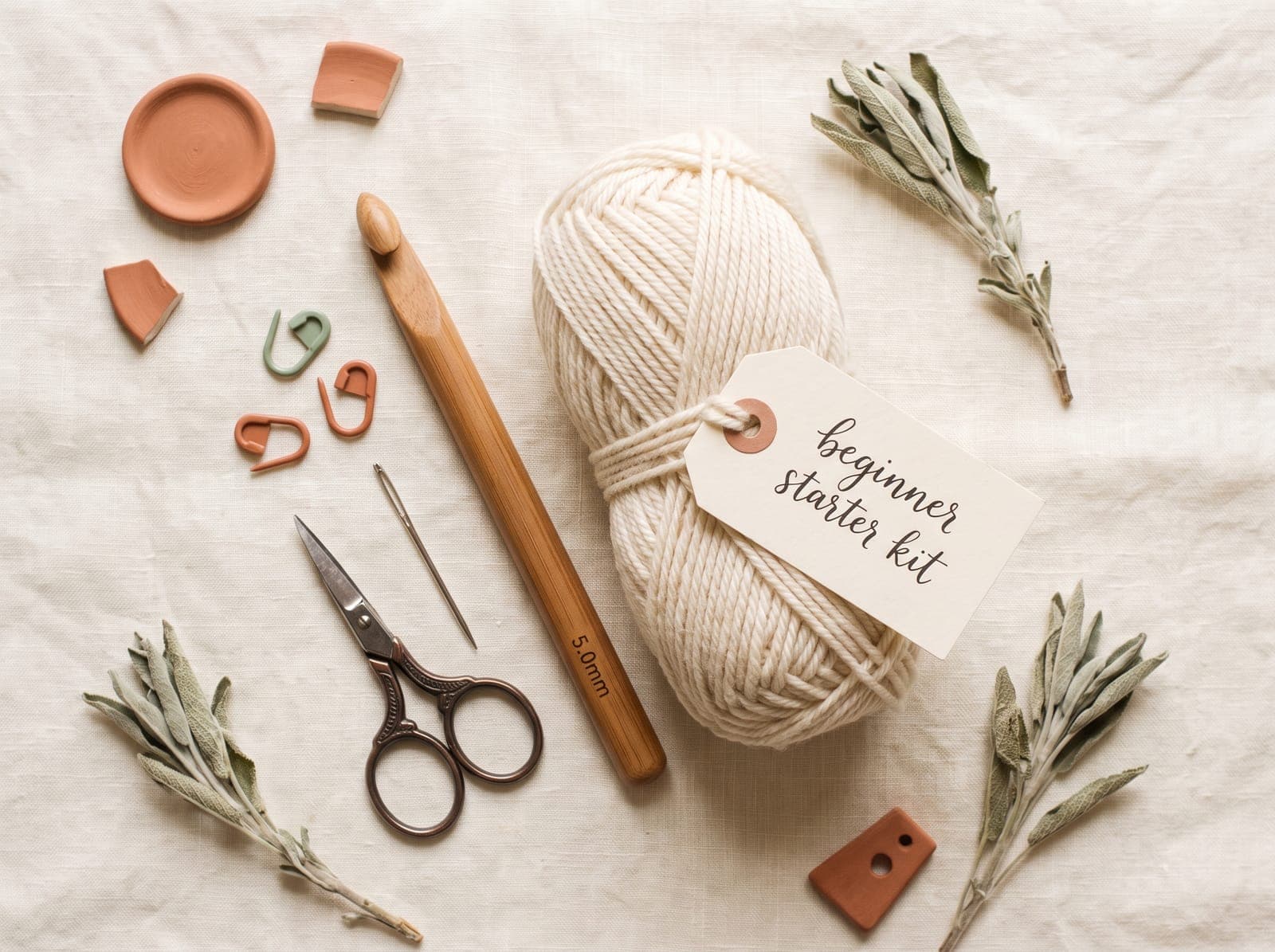
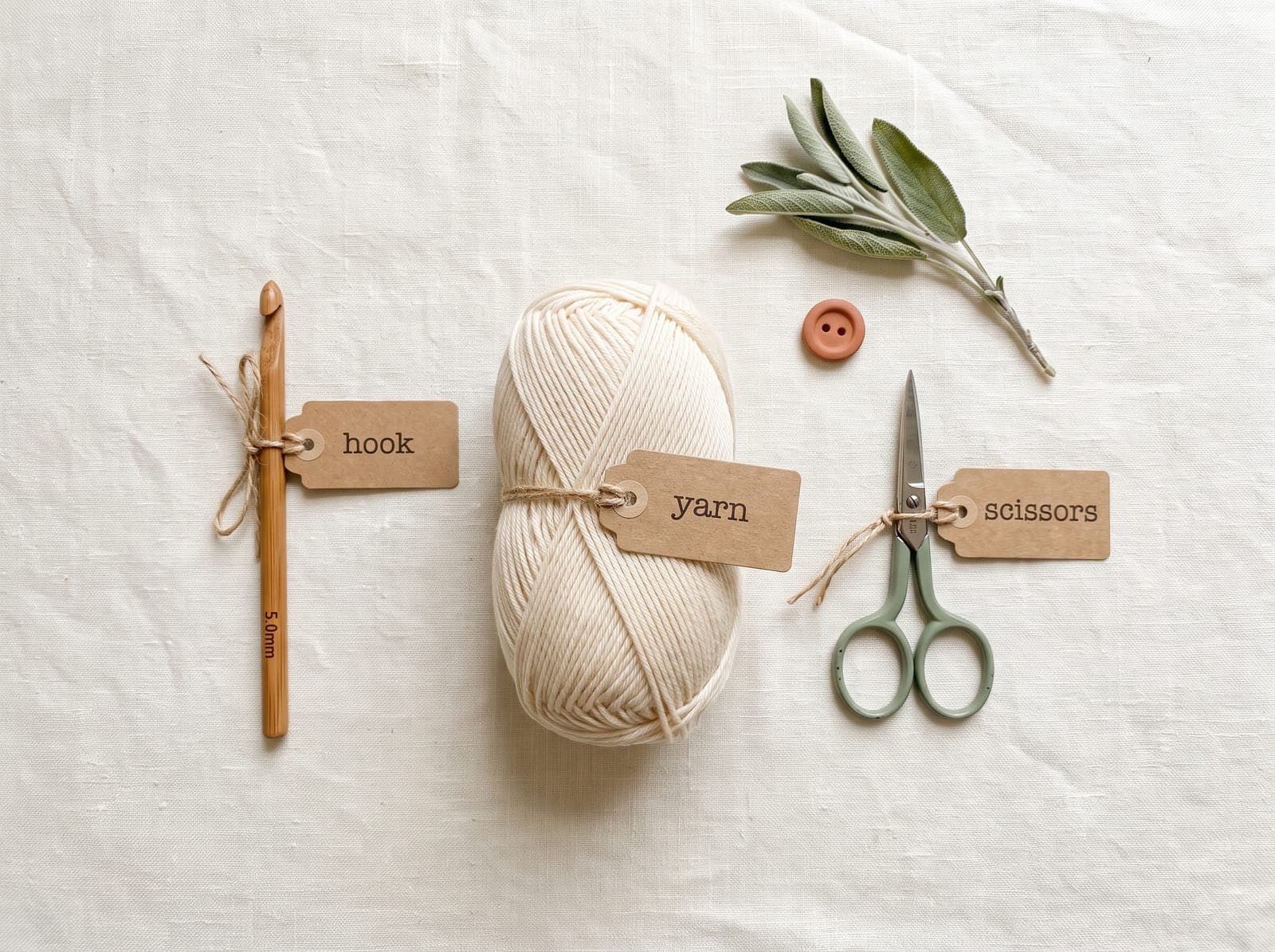
| Crochet hook | 5.0mm (US H/8), aluminum or ergonomic | The tool you'll hold and stitch with |
| Yarn | Smooth worsted weight, light color | Pale, smooth yarn makes stitches easy to see |
| Scissors | Any small, sharp pair | To cut your yarn |
Nice to have (but not yet):a tapestry needle for weaving in ends, and a few stitch markers to keep your place. We'll cover those, and the fun extras, further down.
The rest of this guide walks through each of these in a little more depth, starting with the tool that does the work: the hook.
Crochet hooks: types, materials & which to buy
Your hook is the one tool that does all the work, so it's worth understanding the basics before you buy. The good part: hooks are cheap, and you really only need one to start.
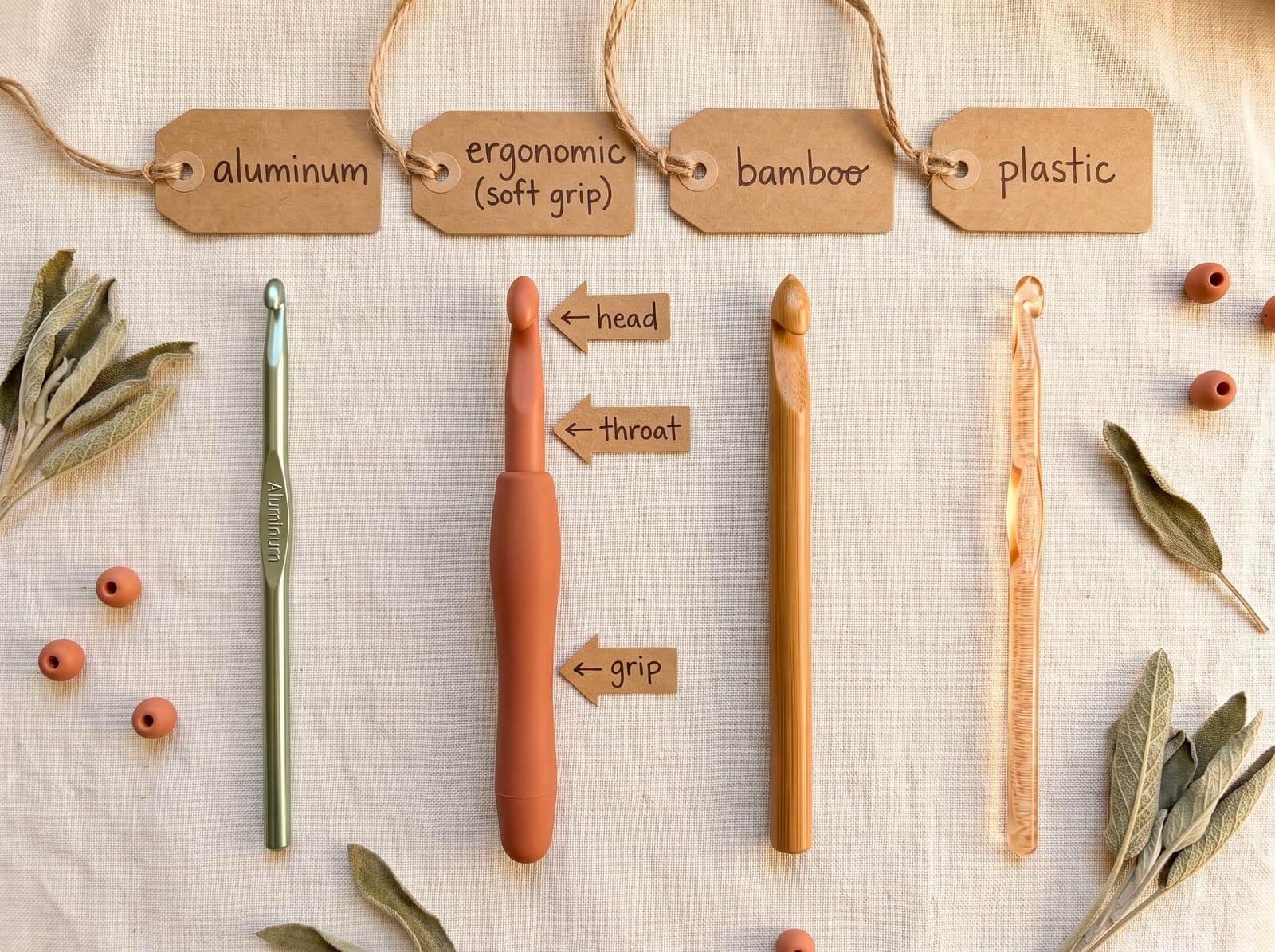
Hook materials (which feels best)
- Aluminum — smooth, affordable, and lets the yarn glide. The classic starter hook.
- Ergonomic (soft-grip handle) — a little pricier, but far kinder to your hand on long sessions. Worth it if your hands cramp.
- Plastic — light and cheap, usually in bigger sizes for chunky yarn.
- Bamboo/wood — warm to hold with a bit more grip, nice if your yarn slides too fast.
Understanding hook sizes
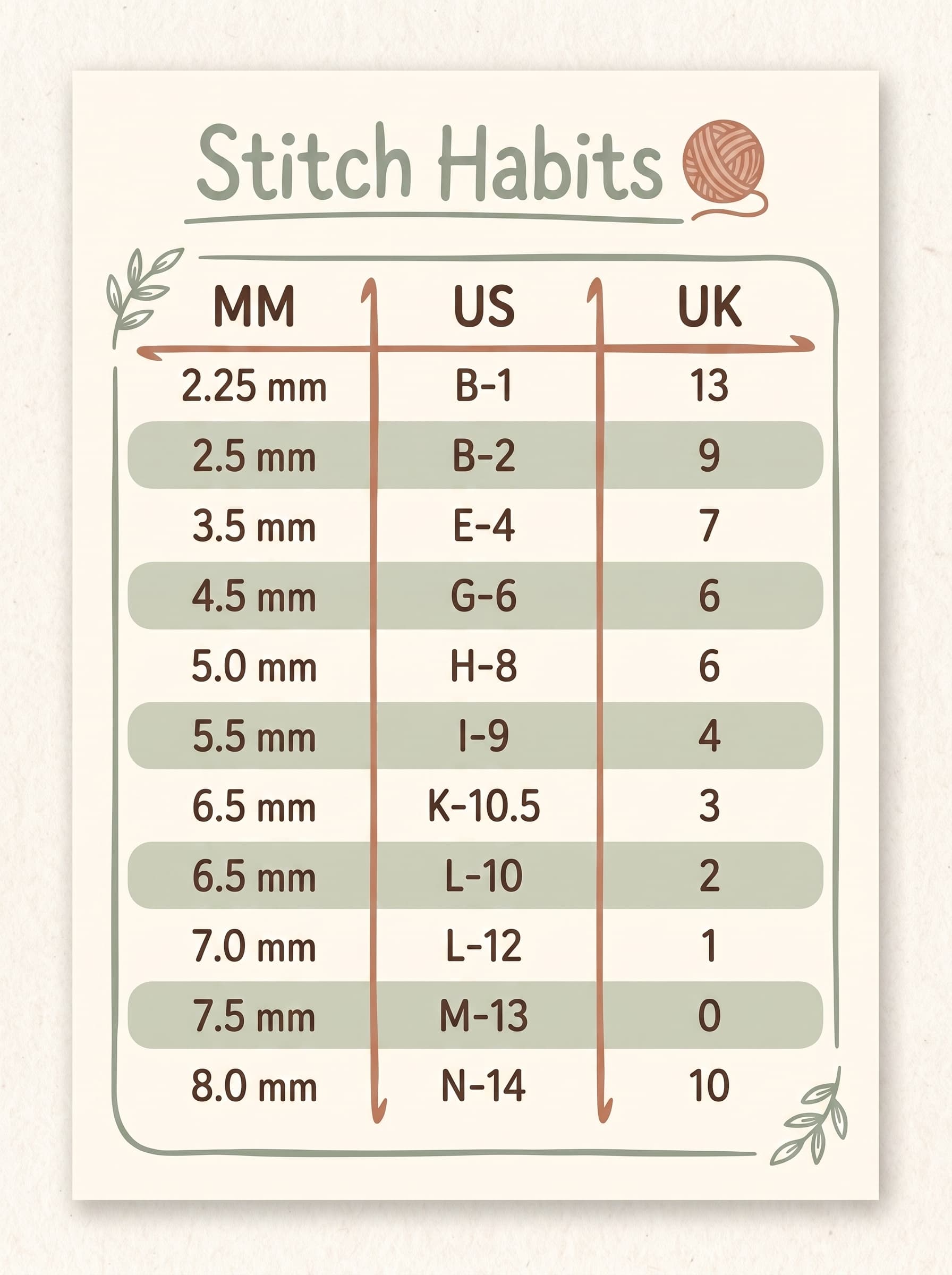
Hook sizes are measured in millimeters (mm), which is the one number that's the same everywhere. The letters (US) and numbers (UK) are just regional labels for those same mm sizes, so when in doubt, go by the mm.
| Metric (mm) | US size | UK size | Typical yarn |
|---|---|---|---|
| 2.25 mm | B/1 | 13 | Lace / fingering |
| 3.5 mm | E/4 | 9 | Sport / DK |
| 4.0 mm | G/6 | 8 | DK / light worsted |
| 5.0 mm | H/8 | 6 | Worsted (great for beginners) |
| 5.5 mm | I/9 | 5 | Worsted / aran |
| 6.0 mm | J/10 | 4 | Aran / chunky |
| 8.0 mm | L/11 | 0 | Chunky / bulky |
| 10.0 mm | N/P-15 | 000 | Super bulky |
Want the full chart with every size, plus which hook to use for each yarn weight? See our complete crochet hook sizes guide.
Yarn: weights, fibers & the best yarn for beginners
Walk into the yarn aisle and it's a wall of color and confusing labels. Don't worry — you only need to understand two things: how thickthe yarn is (its weight) and what it's made of (its fiber).
Yarn weight (how thick it is)
“Weight” doesn't mean how heavy the ball is — it means how thick the strand is. Thicker yarn works up faster and is easier to see, which is why beginners are almost always pointed to worsted weight.
| Weight # | Name | Good for | Suggested hook |
|---|---|---|---|
| 1 | Fingering / sock | Socks, lightweight lace | 2.25–3.5 mm |
| 2 | Sport | Baby items, light garments | 3.5–4.5 mm |
| 3 | DK (light) | Garments, shawls | 4.0–5.0 mm |
| 4 | Worsted (medium) | Blankets, hats, most beginner projects | 5.0–6.0 mm |
| 5 | Bulky | Cozy blankets, quick makes | 6.5–9.0 mm |
| 6 | Super bulky | Chunky blankets, fast projects | 9.0 mm+ |
Fiber (what it's made of)
- Acrylic — cheap, washable, comes in every color. The go-to beginner fiber, no guilt if you make mistakes.
- Cotton — sturdy and stitch-defining, great for washcloths, bags, and amigurumi.
- Wool — warm and stretchy, lovely for garments (just check if it's machine washable).
- Blends — mix the best of both, like a soft acrylic-wool for cozy wearables.
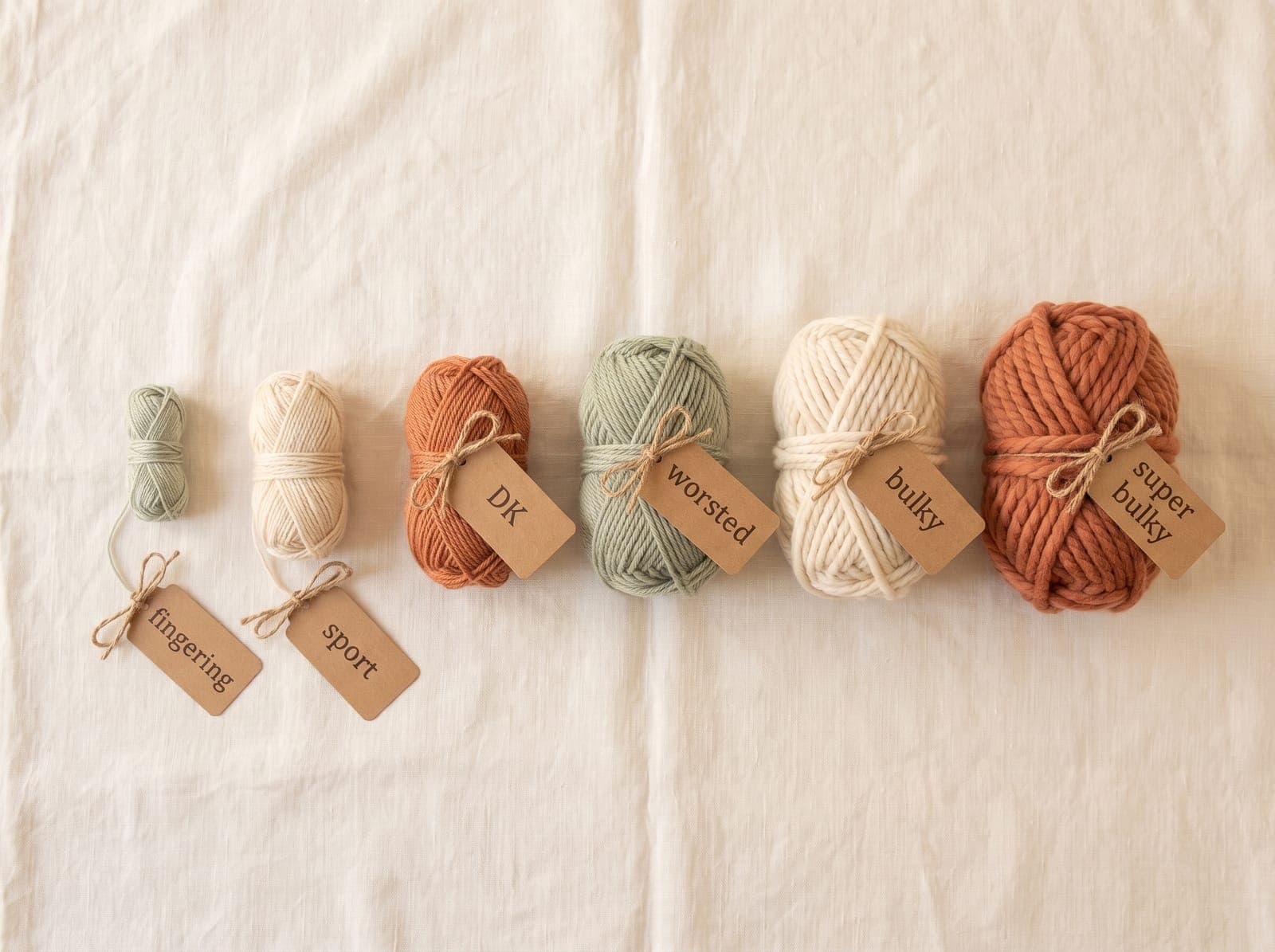
Want to go deeper on reading yarn labels and choosing fibers? See our full yarn weights guide(soon).
How to match your hook to your yarn
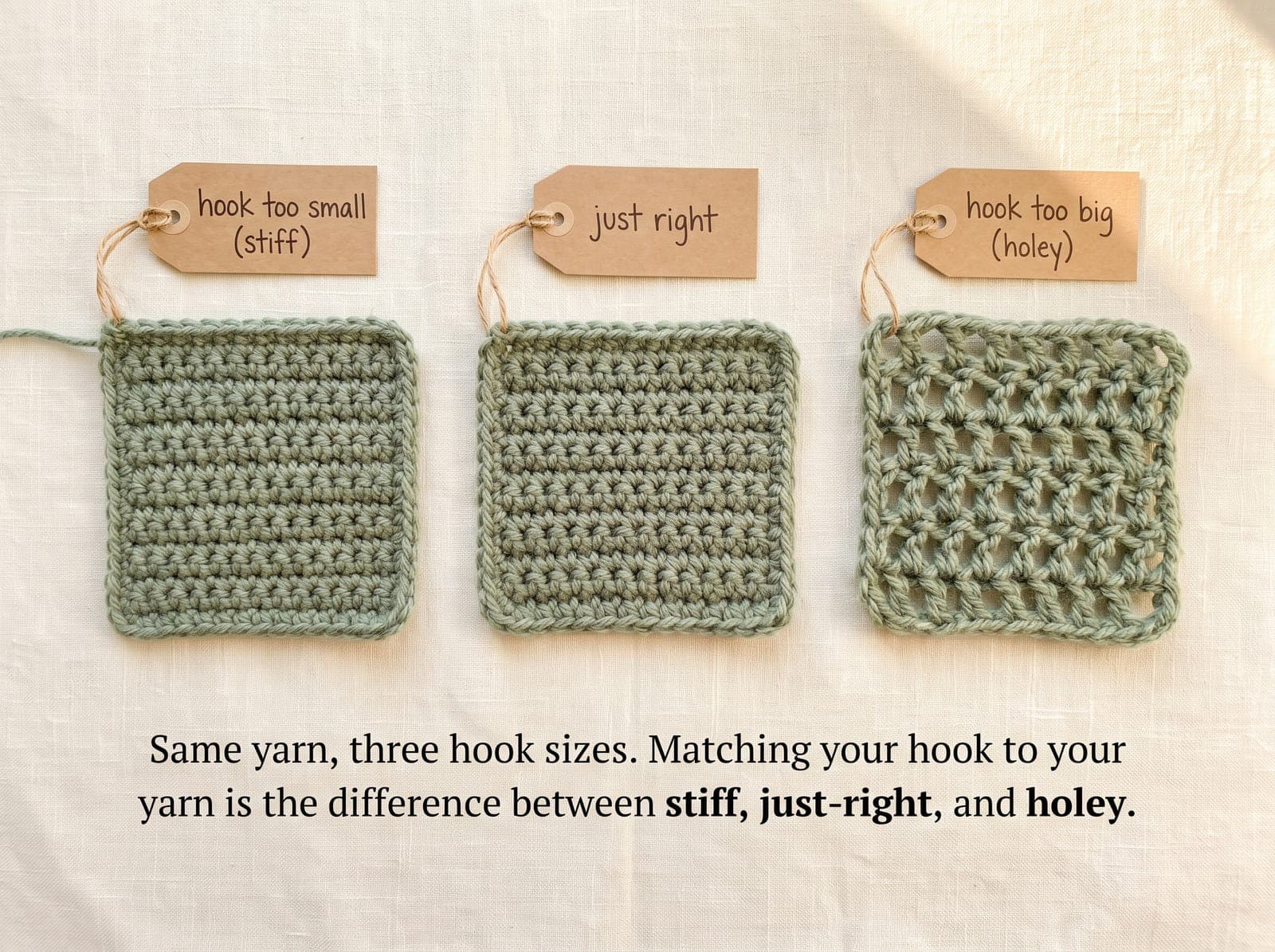
This is the question that trips up almost every beginner, and one most guides skip: which hook goes with which yarn? The short version: thicker yarn needs a bigger hook, thinner yarn needs a smaller one. Get them roughly matched and your fabric comes out looking right — not too stiff, not full of holes.
The easiest cheat: read the yarn label.Every ball of yarn has a little recommended hook size printed on it (usually near a small hook symbol). When in doubt, start there. It's the fastest, most reliable answer.
| Your yarn | Reach for a hook around |
|---|---|
| Fingering / sock (1) | 2.25–3.5 mm |
| Sport (2) | 3.5–4.5 mm |
| DK (3) | 4.0–5.0 mm |
| Worsted (4) | 5.0–6.0 mm |
| Bulky (5) | 6.5–9.0 mm |
| Super bulky (6) | 9.0 mm and up |
One more thing: the label and this chart are starting points. Everyone crochets with slightly different tension, so if your fabric doesn't feel right even at the recommended size, trust your hands and adjust the hook up or down until it does.
Essential notions (the small stuff that helps)
Beyond a hook and yarn, a few tiny tools make crocheting a lot smoother. None cost much, and you'll reach for them constantly.
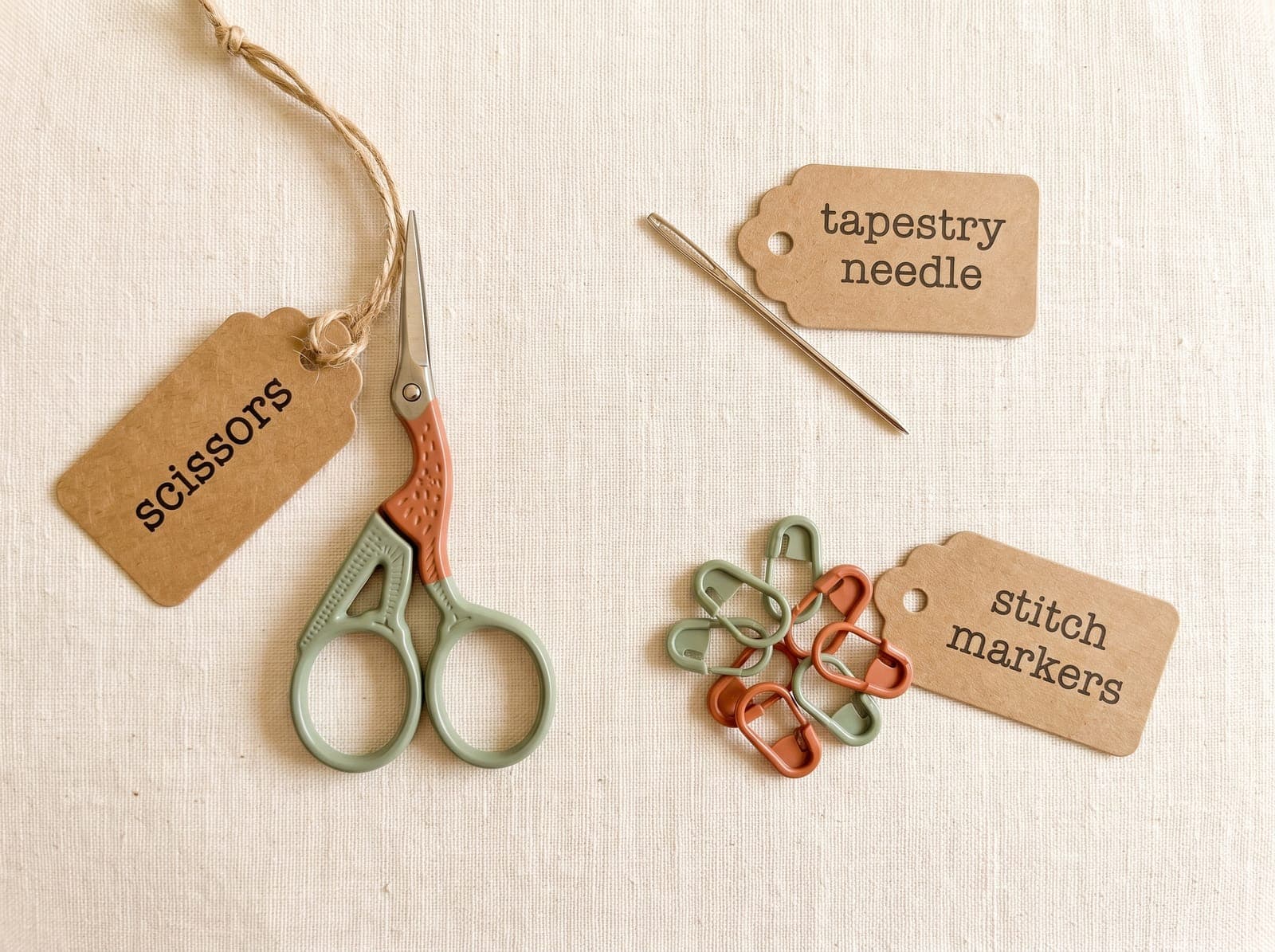
- Scissors — a small, sharp pair for clean cuts. That's it, nothing fancy.
- Tapestry needle — a blunt, large-eyed needle for weaving in your yarn tails and seaming pieces together. The thing that makes your finished work look tidy.
- Stitch markers — little clips that mark your place: the start of a round, a spot to count from, or where to increase. They save you constant recounting.
Want the details? We break down what a tapestry needle is and how to use it(soon) and how stitch markers work(soon) in their own guides.
Nice-to-have tools (once you're hooked)
None of these are must-haves, so don't rush out and buy them. But once crochet becomes a regular thing, they make life easier and your projects look more polished. Add them when you feel the need.
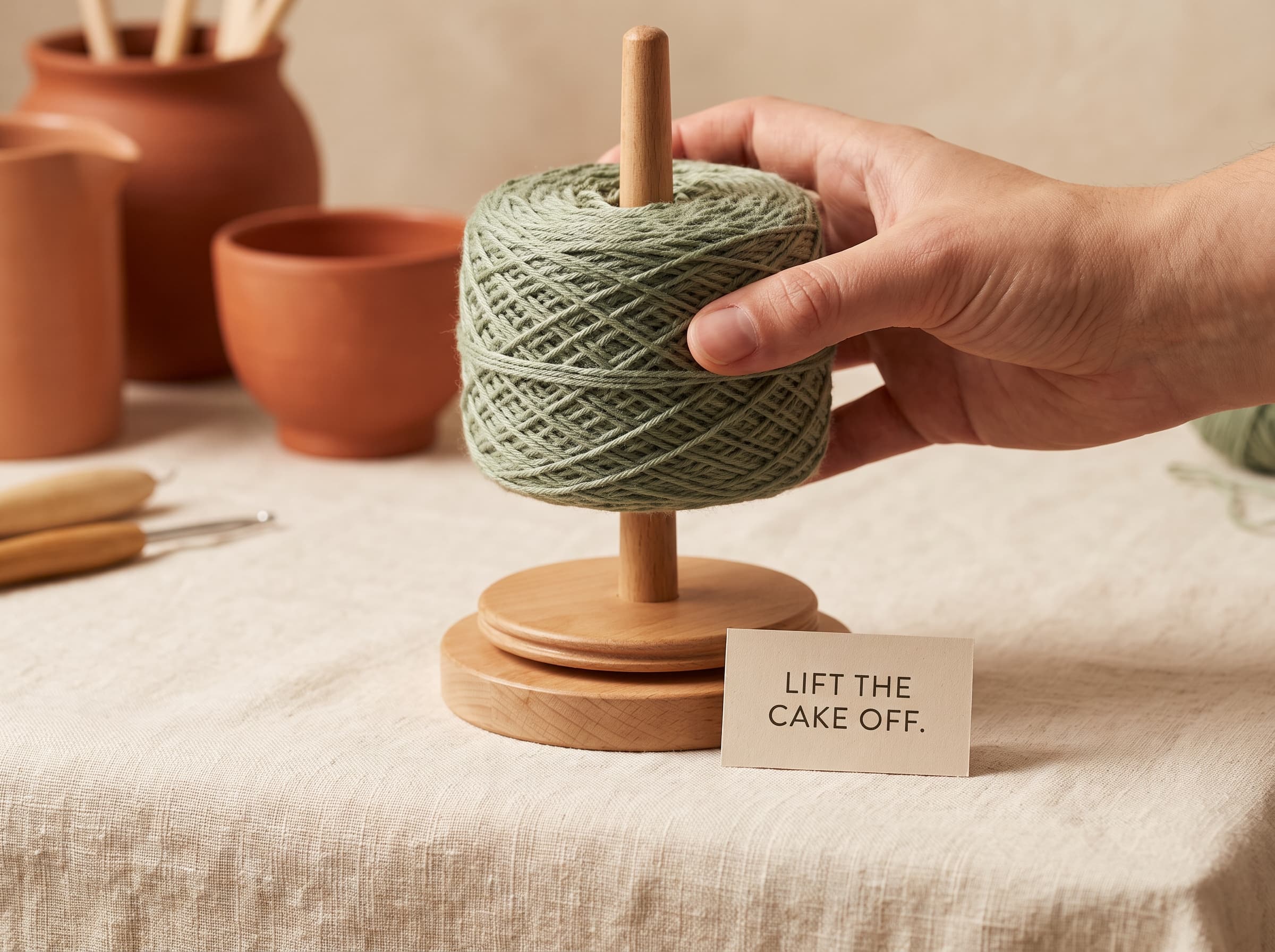
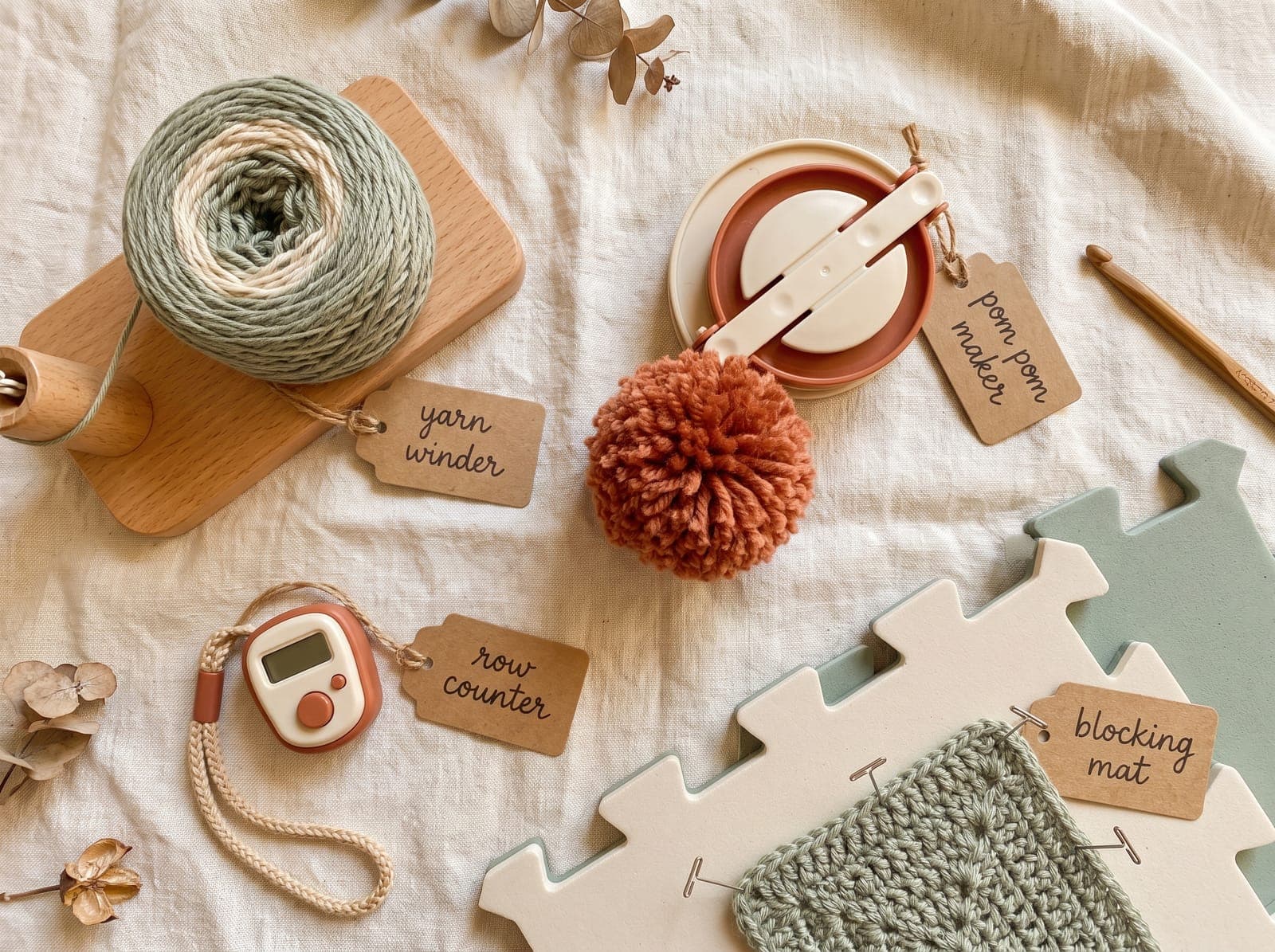
- Yarn winder — turns messy skeins into neat, pull-from-the-center cakes. A game-changer once you're using a lot of yarn. → how to use a yarn winder
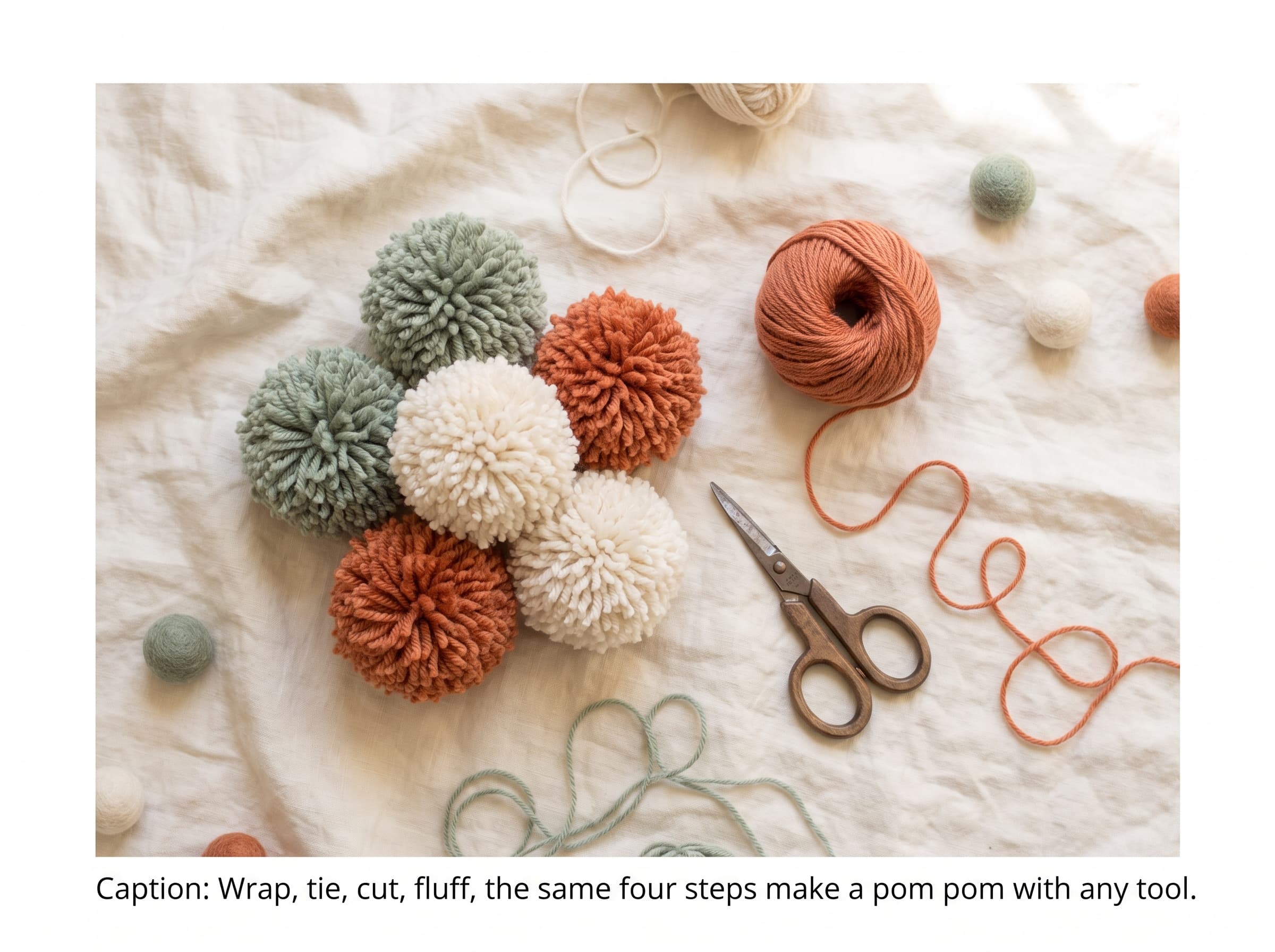
- Pom pom maker — for perfect, fluffy pom poms on hats and keychains (a fork or your fingers work too). → how to make pom poms
- Row counter — a little clicker to track rows so you don't lose count on bigger projects. Handy for blankets and garments.
- Blocking mats & pins — foam mats you pin your finished piece to (slightly damp) so it dries into shape. This is the secret behind pro-looking shawls, granny squares, and garments.
- Project bag — keeps a work-in-progress and its yarn together and tangle-free. Small thing, big sanity boost.
A simple beginner starter kit + budget
Let's put it all together. Here's the honest, no-overwhelm shopping list to get you crocheting, plus roughly what it costs. The short version: you can start for under $15.
The essentials (buy these first)
| Item | What to get | Rough cost |
|---|---|---|
| Crochet hook | One 5.0mm (H) aluminum or ergonomic | $2–8 |
| Yarn | 1 ball smooth worsted acrylic, light color | $3–6 |
| Scissors | Any small sharp pair (you likely own some) | $0–5 |
| Starter total | ~$5–15 |
Add soon (optional, ~$10–20 more)
| Item | Why | Rough cost |
|---|---|---|
| Tapestry needle | Weave in ends neatly | $2–5 |
| Stitch markers | Keep your place | $3–6 |
| A full hook set | Sizes for any future pattern | $8–15 |
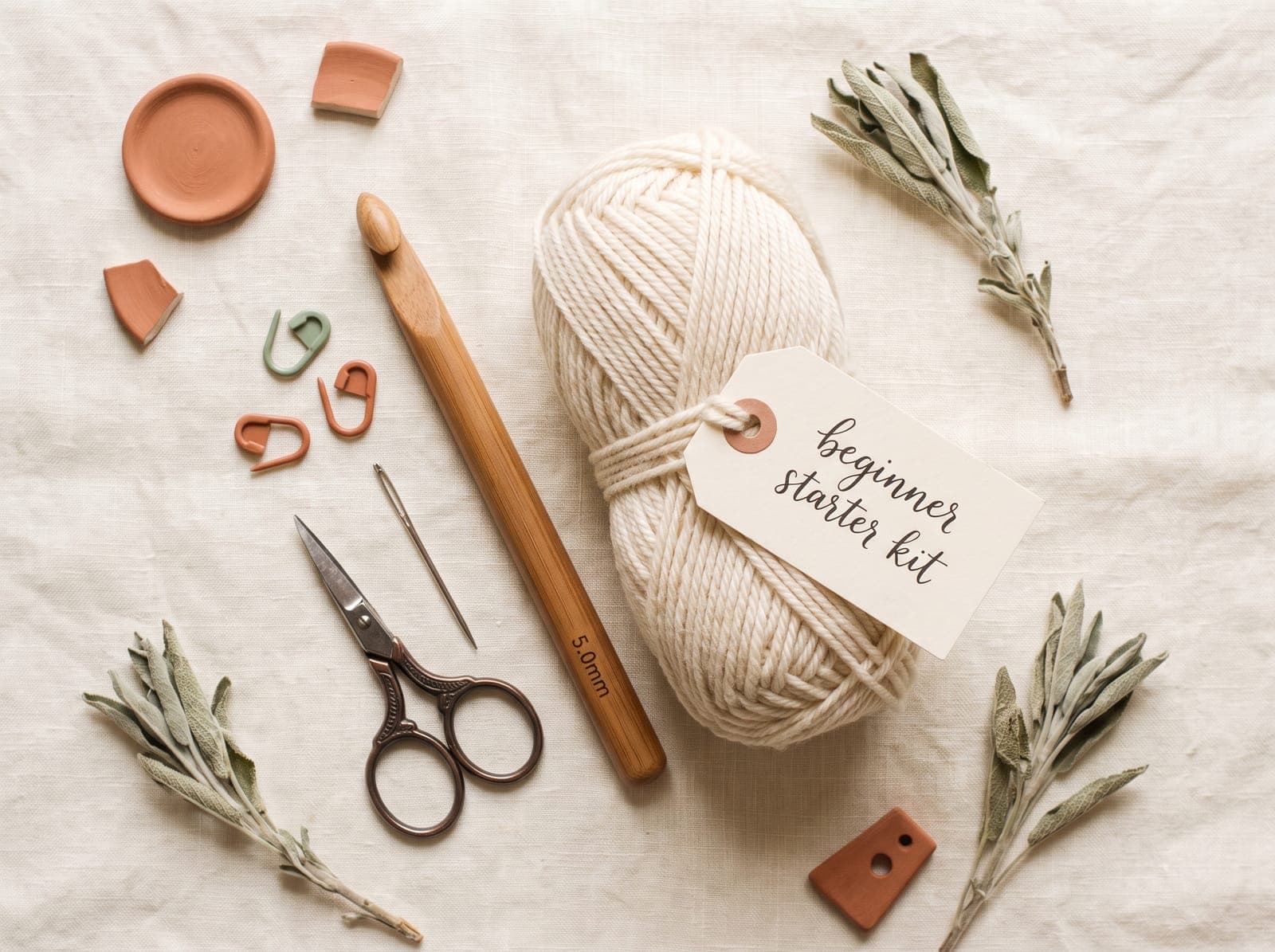
Prices are rough guides and vary by brand and region — they're here to show that starting crochet is genuinely affordable.
Common beginner mistakes when buying supplies
A few buying slip-ups catch almost every new crocheter. Save yourself the hassle (and the wasted money) by dodging these.
Buying too much, too soon
It's tempting to grab a whole basket of yarn and gadgets on day one. Skip it. Start with one hook and one ball, make something, then buy for your next project.
Choosing dark or fuzzy yarn to learn on
Black yarn and fluffy novelty yarn look gorgeous, but the stitches are almost impossible to see while you're learning. Start pale and smooth, save the fancy stuff for when you can stitch with your eyes closed.
Picking the cheapest, scratchiest yarn
Bargain-bin acrylic can feel rough and split as you work, which is frustrating for a beginner. A soft, mid-range worsted costs a little more and makes learning far more pleasant.
Ignoring the yarn label
That little symbol on the label tells you the recommended hook size — exactly the info beginners struggle to guess. Read it, it saves you the mismatched-fabric headache.
Grabbing the wrong hook size for your yarn
A tiny hook with chunky yarn (or vice versa) makes stitching a fight. Match them using the label or the chart above.
Where to start: easy first projects
Supplies sorted? The best next step is to actually make something small and finishable. Nothing builds confidence like a completed project, even a tiny one.
First, get comfy with the basic stitches — our crochet stitches guide walks you through every one with photos. Then pick an easy first make:
- A washcloth — just rows of one stitch in a square. The classic first project.
- A granny square — small, repeatable, and the building block of blankets.
- A simple scarf — practice your rhythm while making something wearable.
- A coaster — a quick, satisfying one-evening win.
Ready to make something? Browse our free beginner crochet patterns and pick one to try with your new supplies.
Frequently asked questions
Get the free printable Crochet Stitch Guide
A one-page printable cheat sheet of every basic stitch. Print it and keep it by your hook.
- ✓Instant PDF download
- ✓Beginner-friendly
- ✓No spam, ever