How to Double Crochet: Step-by-Step for Beginners
Updated July 2026 · 5 min read
What is double crochet?
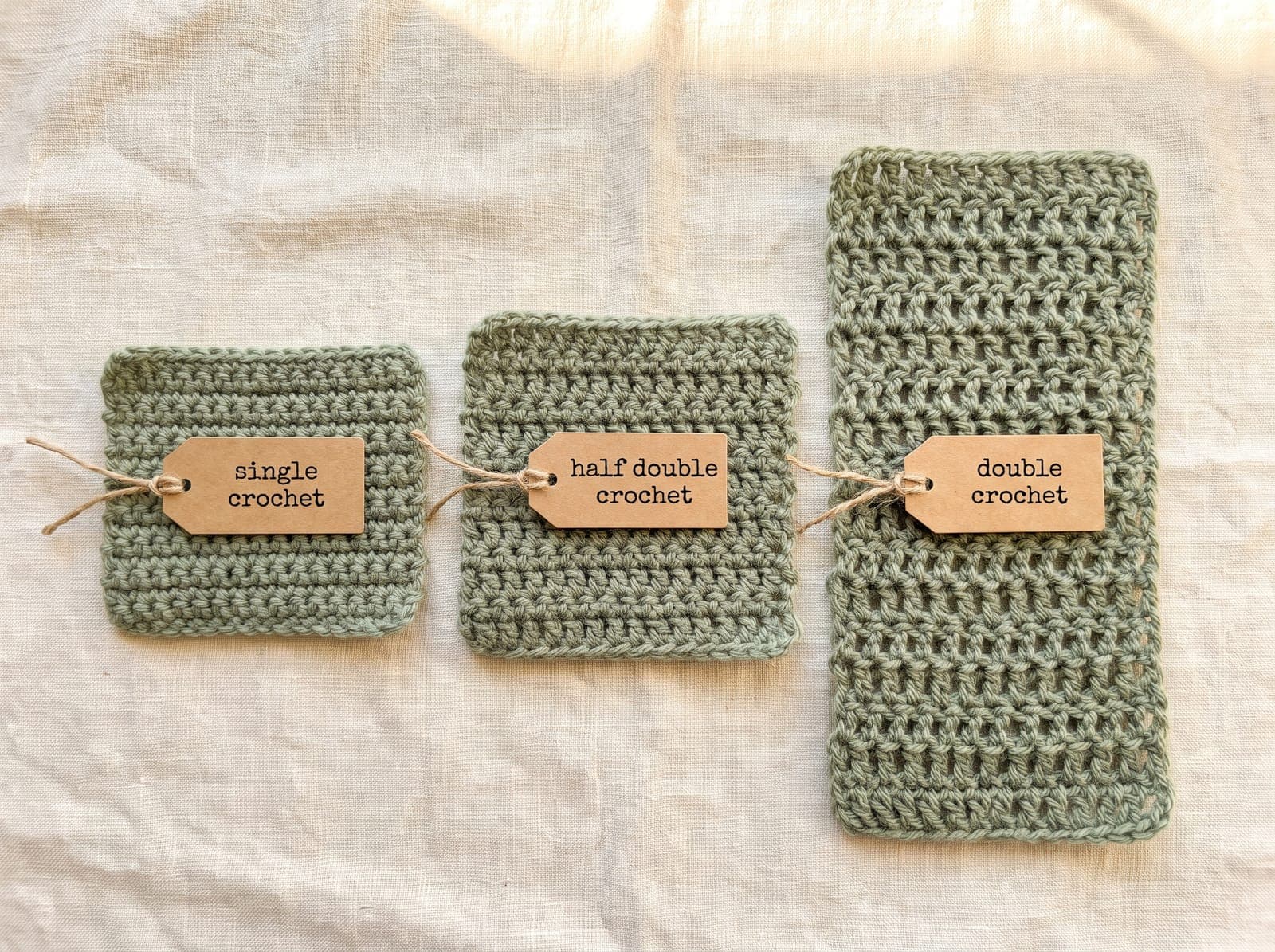
Double crochet (abbreviated dc) is a tall, versatile basic crochet stitch. To make one, you yarn over, insert your hook into the stitch, yarn over and pull up a loop (3 loops on your hook), yarn over and pull through 2 loops, then yarn over and pull through the last 2. That's one double crochet.
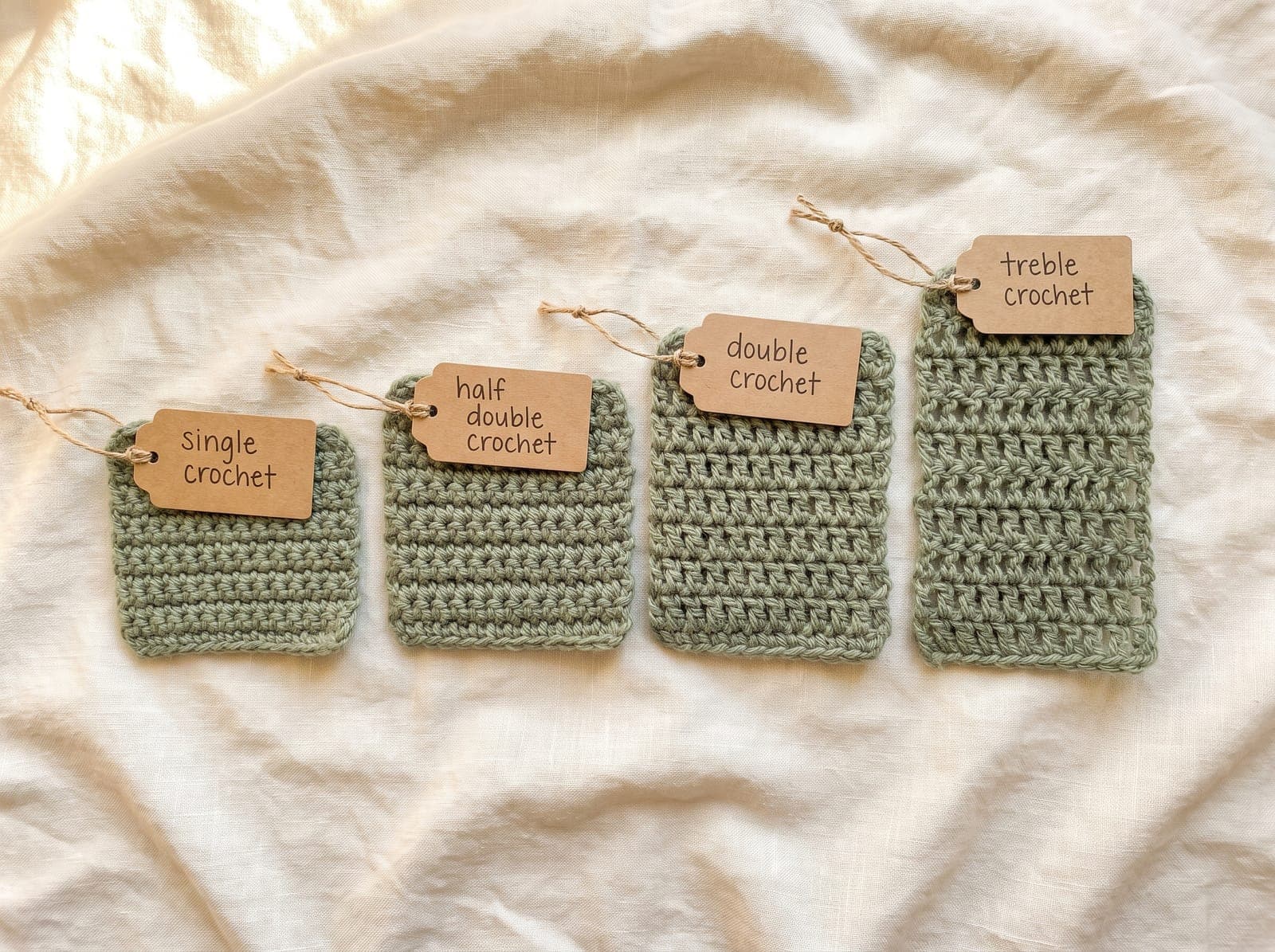
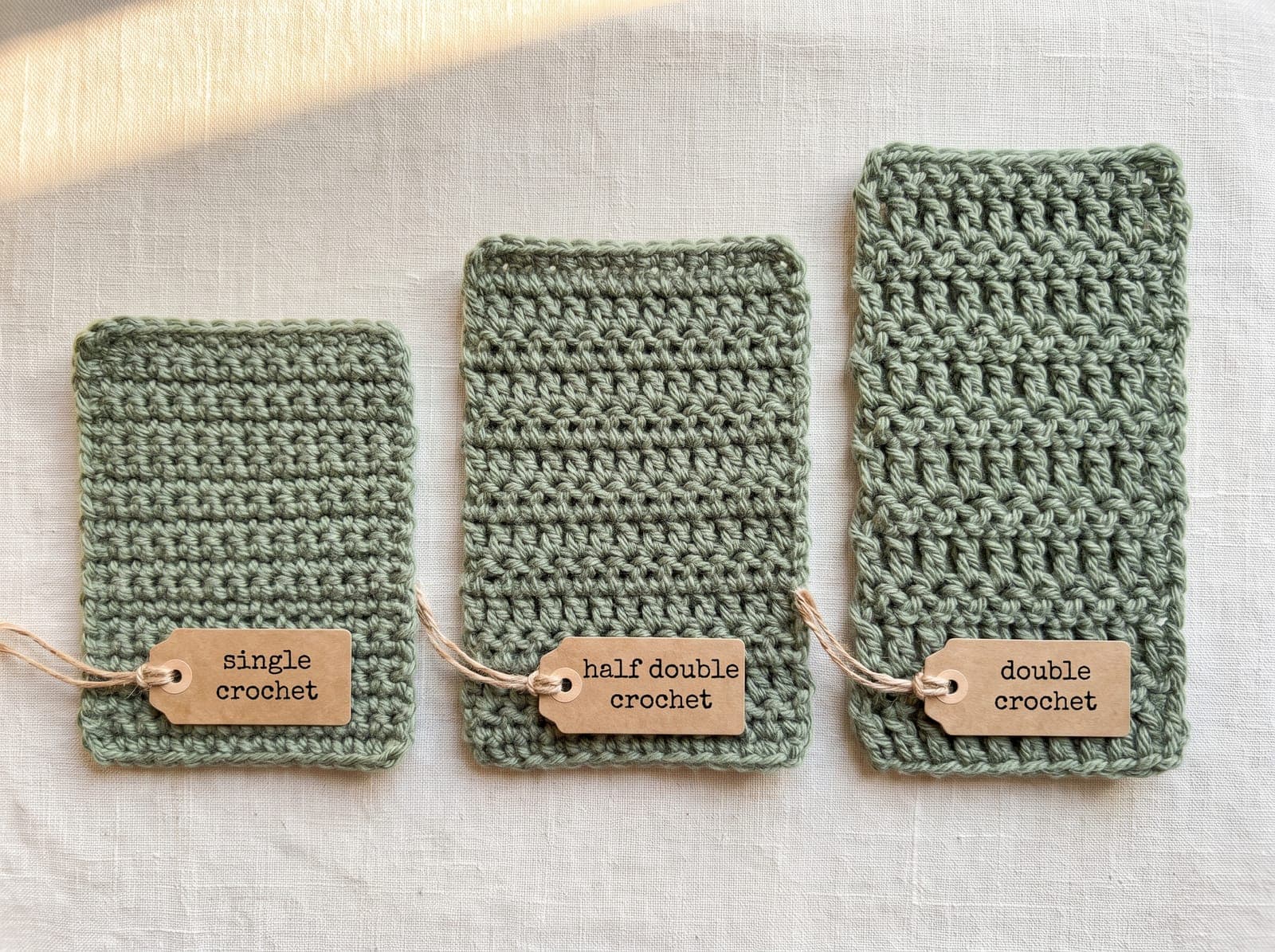
If crochet had a workhorse, this would be it. Double crochet is the stitch you'll reach for most — blankets, cardigans, granny squares, shawls, it's everywhere. It's tall, so your work grows satisfyingly fast, and a little open, so the fabric feels light and drapey rather than dense.
Coming from single or half double crochet? The move is the same idea, just taller. The one new habit: instead of finishing in a single pull, you work the loops off your hook in two steps. That two-step finish is the whole trick, and it's easier than it sounds.
What you'll need
Nothing new, just the basics:
| What | Recommended for practice | Why |
|---|---|---|
| Hook | 5.0mm (US H/8) | A comfy mid-size that's easy to control |
| Yarn | Smooth worsted weight, light color | Pale yarn shows where each tall stitch begins and ends |
| Scissors | Any small pair | To cut your yarn at the end |
You'll also want a short foundation chain to work into — chain about 12 to practice. New to chaining? Our crochet stitches guide covers it in seconds.
How to double crochet, step by step
Five small moves, and like half double crochet, you yarn over before you insert your hook. The one thing that makes double crochet double crochet: you don't close it all at once, you clear the loops off your hook in two steps.
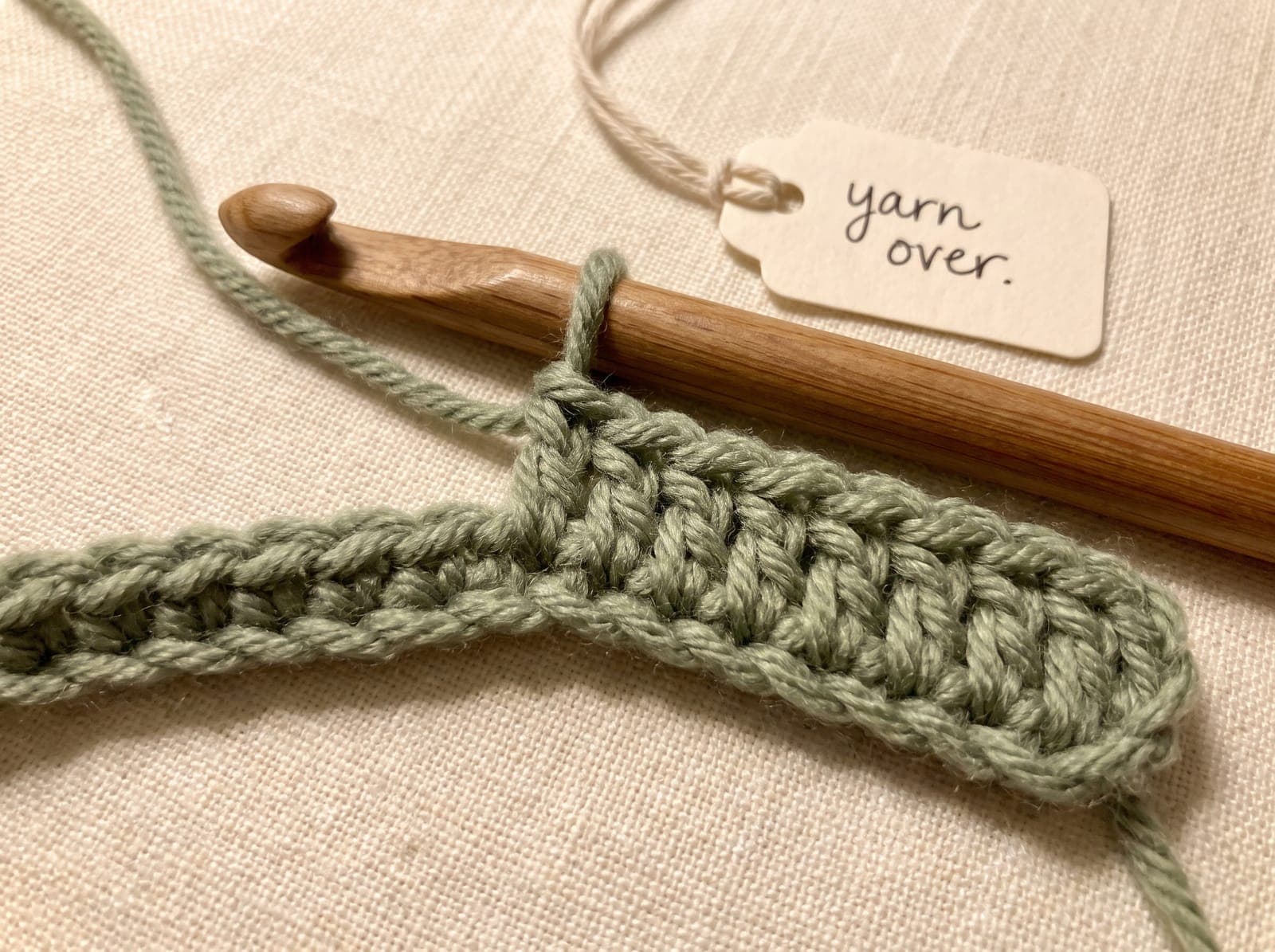
Yarn over
Wrap the yarn over your hook before you go anywhere near the stitch.
Insert your hook
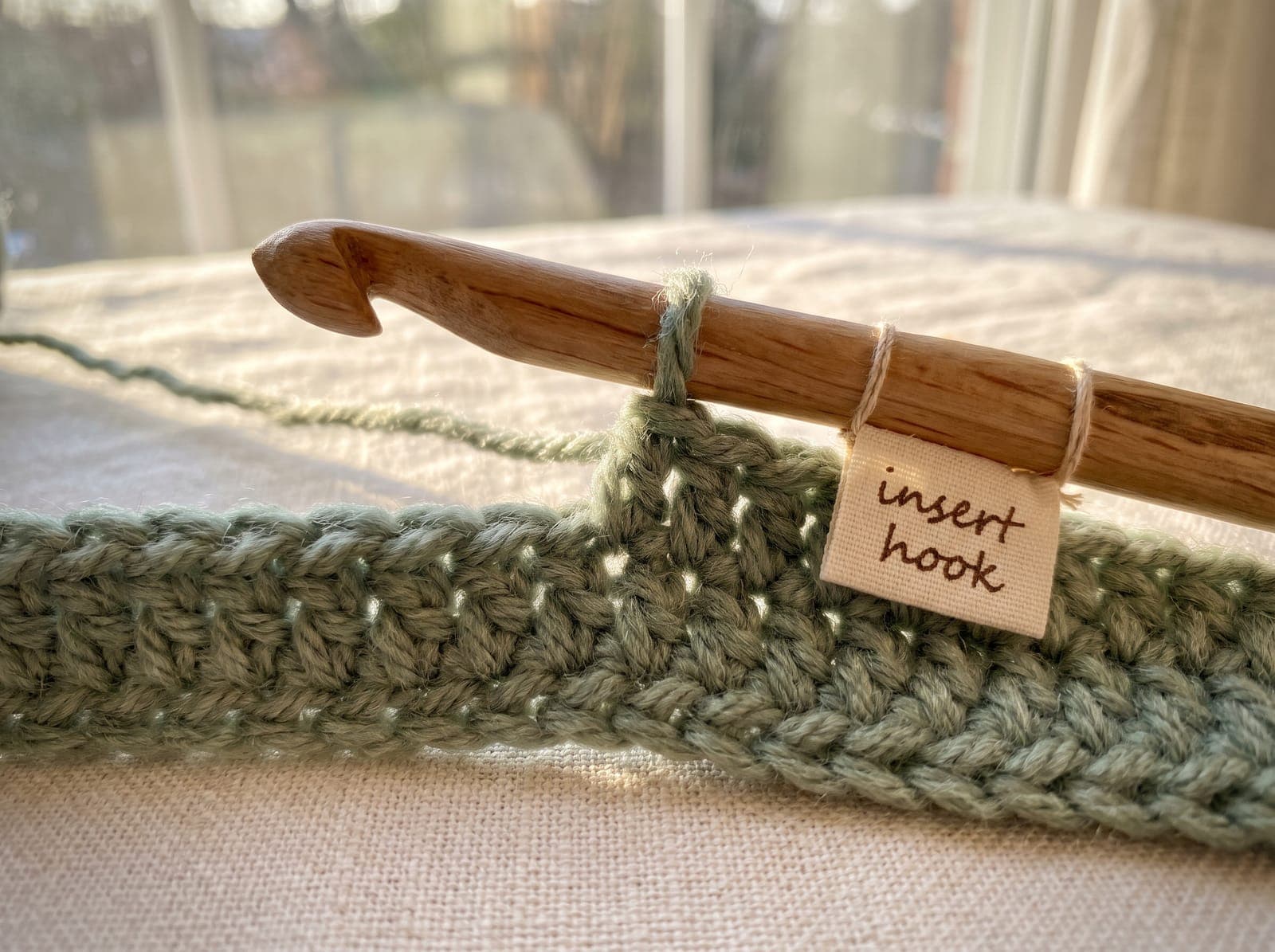
With the yarn wrapped, push your hook into the next stitch, under the top two loops (the "V").
Yarn over, pull up a loop
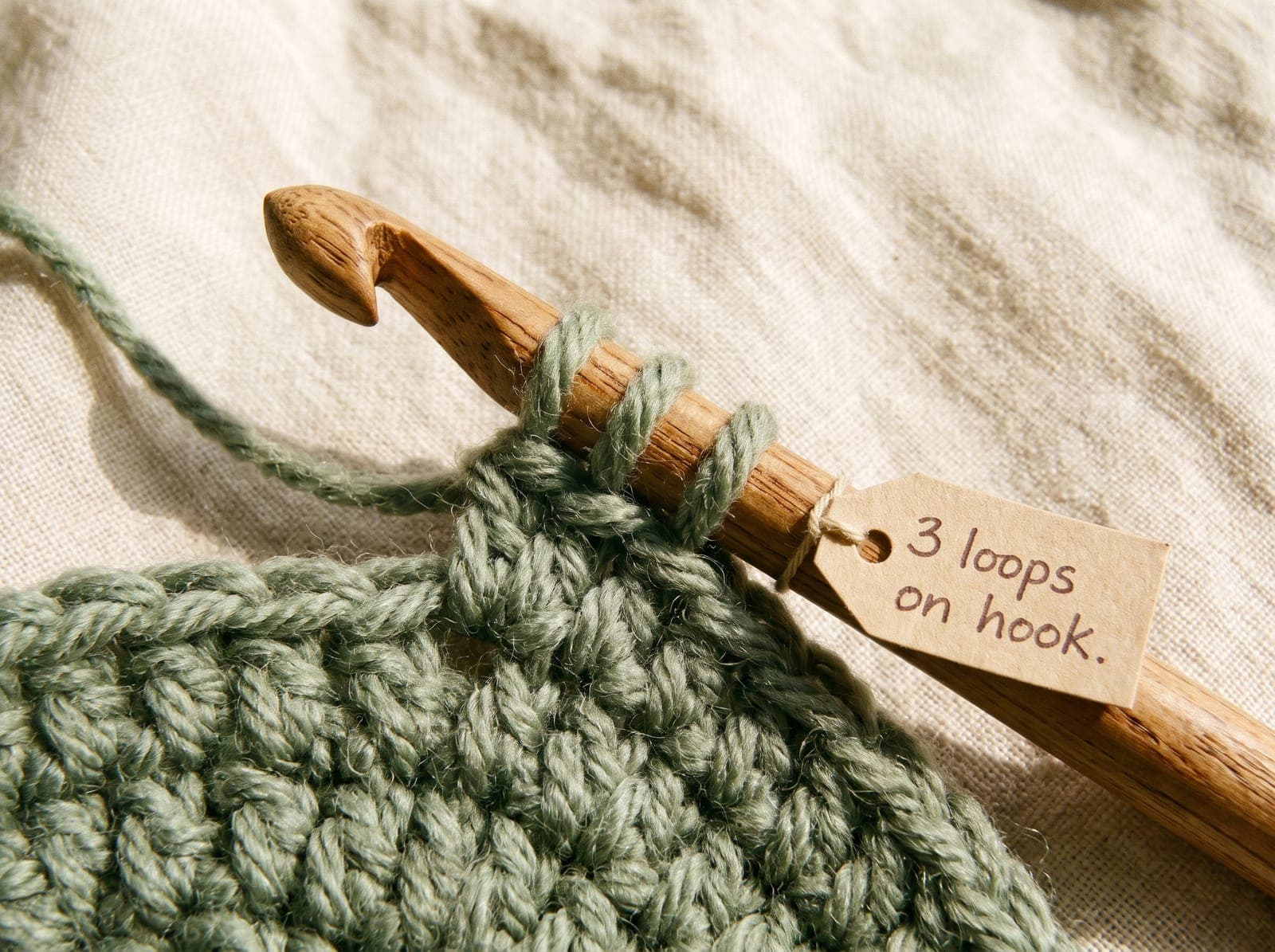
Yarn over and pull a loop back up through the stitch. You'll have 3 loops on your hook.
Yarn over, pull through 2
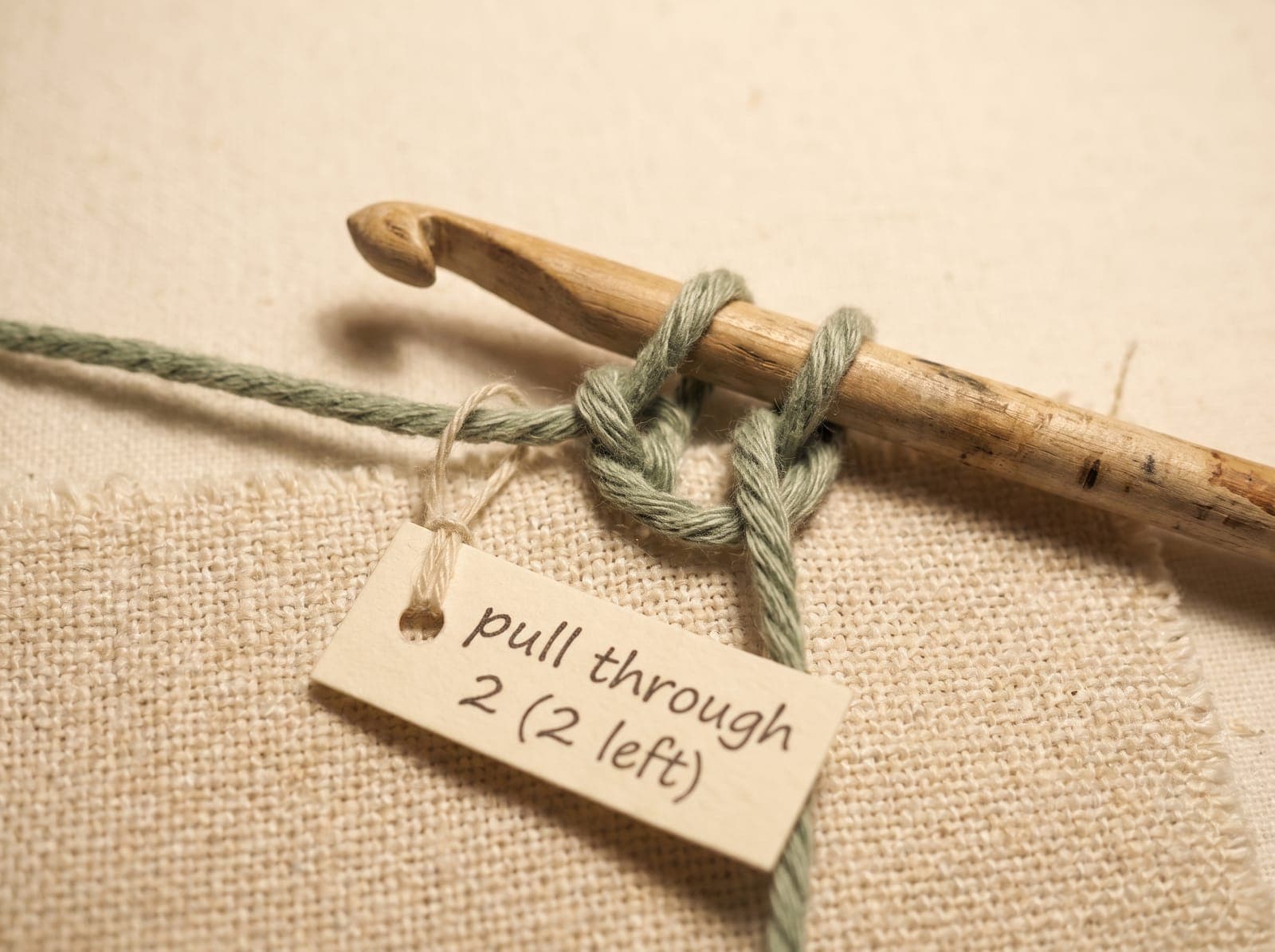
Yarn over again and pull through just the first 2 loops. Now you're down to 2 loops on the hook. (This is the step that makes double crochet different — don't close all three at once.)
Yarn over, pull through the last 2
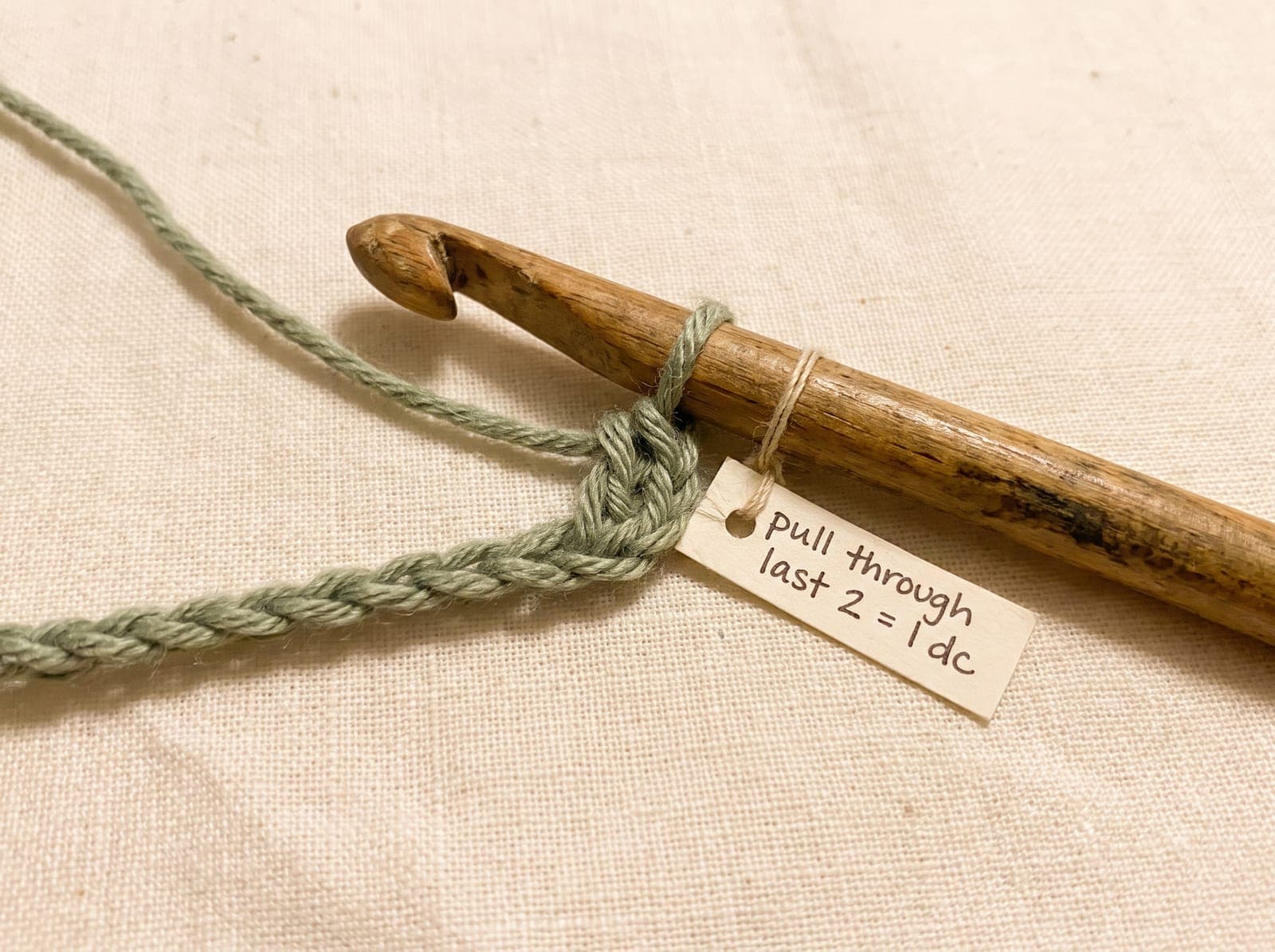
Yarn over one more time and pull through the last 2 loops. You're left with a single loop, and that's one double crochet made.
Repeat those five moves into each stitch across the row. The rhythm — yarn over, insert, pull up, pull through 2, pull through 2 — is double crochet. It clicks fast, and soon you'll be flying across rows.
Starting your first row (working into the chain)
That first row into the chain always feels a bit awkward, and double crochet is no different. Push through it — row two is where it gets comfy.
- 1Make your foundation chain (about 12 to practice).
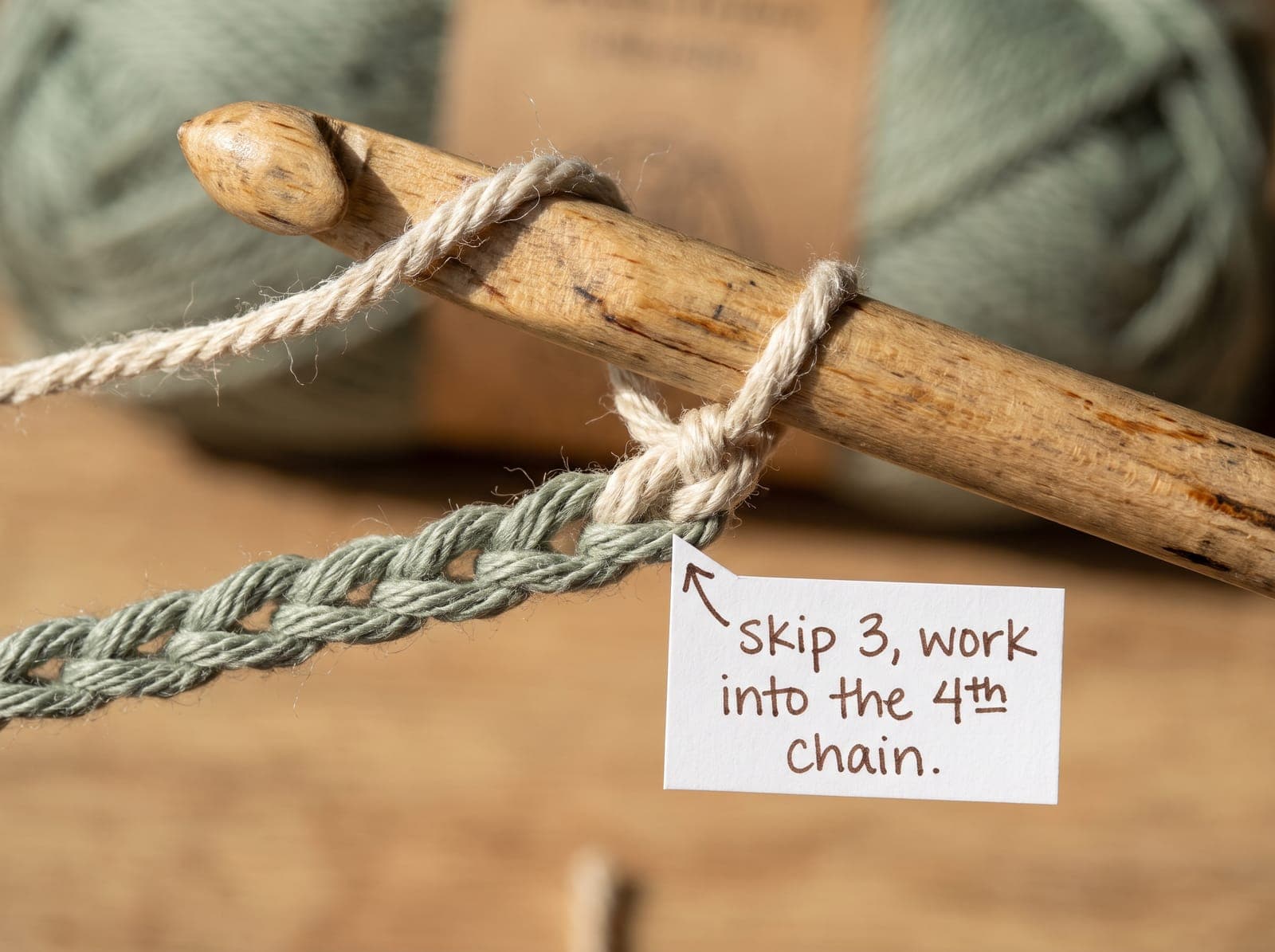
- 2Skip the first 3 chains from your hook.
- 3Yarn over, then work your first double crochet into the 4th chain.
- 4Double crochet into each remaining chain to the end.
The turning chain (where double crochet trips people up)
Here's the one that confuses almost every beginner: with double crochet, the chain 3 at the start of a new row usually counts as your first double crochet. So when you turn your work:
- Chain 3, turn. That chain-3 = your first dc.
- Skip the very first stitch (the chain-3 already covers it) and work your next dc into the second stitch.
- At the end of the row, work your last dc into the top of the previous row's chain-3.
Quick check: count your stitches at the end of each row. Same number every time means your edges are staying straight.
Common double crochet mistakes (and how to fix them)
Double crochet is quick to learn, but a handful of slip-ups catch nearly everyone. Here's what goes wrong and the easy fix for each.
Old half-double-crochet habit sneaking in. Close all three loops together and you've made a half double, not a double. Fix: always go in two steps — pull through 2, then pull through the last 2.
If you skip the first stitch but don't count the chain-3 as a stitch, you leave a little hole at the edge. Fix: treat the chain-3 as your first dc, skip the first stitch, and work the last stitch of the row into the top of the previous chain-3.
Rows getting wider or narrower usually means you missed that last chain-3, or added a stitch at the start. Fix: count your stitches every row — same number each time keeps your sides straight.
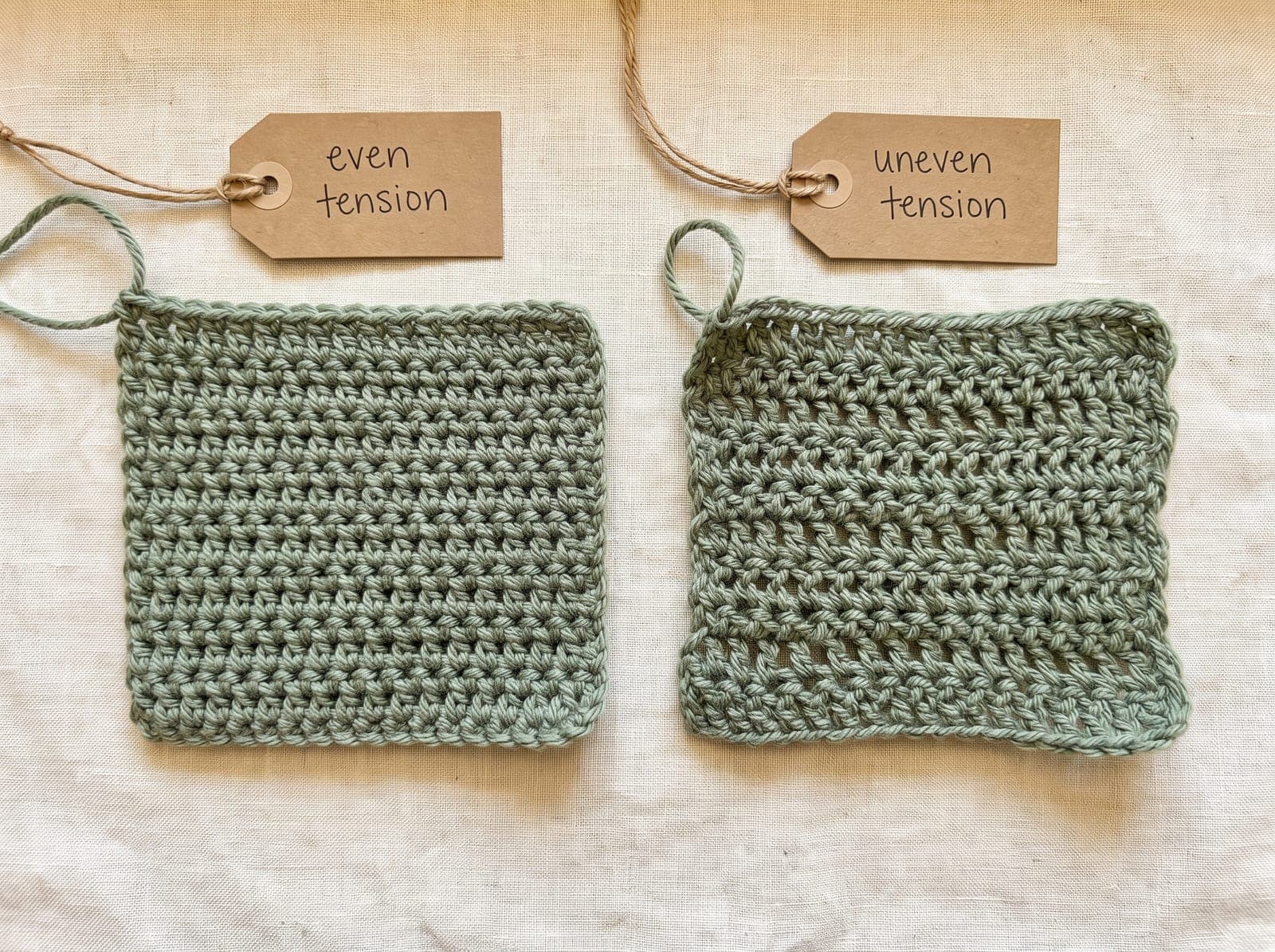
Big loose gaps or wobbly stitches usually come from inconsistent tension while pulling up your loop. Fix: keep your yarn feeding evenly and try to pull each loop to about the same height.
Get past these and your double crochet rows will come out even and tidy, which brings us to a few habits that make them look really polished.
Tips for neat, even double crochet
Once the stitch feels natural, these small habits are what make your rows look polished instead of “still learning.” None are hard — they're just easy to forget.
- Pull each loop to the same height. Double crochet is tall, so uneven loops show more than in shorter stitches. Aim for a consistent, relaxed pull every time.
- Sort out your turning chain and stick with it. Decide whether your chain-3 counts as a stitch, then do it the same way every row so your edges stay even.
- Count every row. A quick stitch count catches a missed turning chain or a sneaky extra stitch before it becomes a crooked edge.
- Keep tension relaxed, not tight. Tight double crochet is a struggle to work into and loses that soft drape. Loosen up and let the stitch breathe.
- Work into the right spot at the ends. Your last stitch of the row goes into the top of the previous row's turning chain — the most-missed stitch in double crochet.
Nail these and your double crochet will look clean and even. So, what can you make with it? Quite a lot, as it turns out.
What can you make with double crochet?
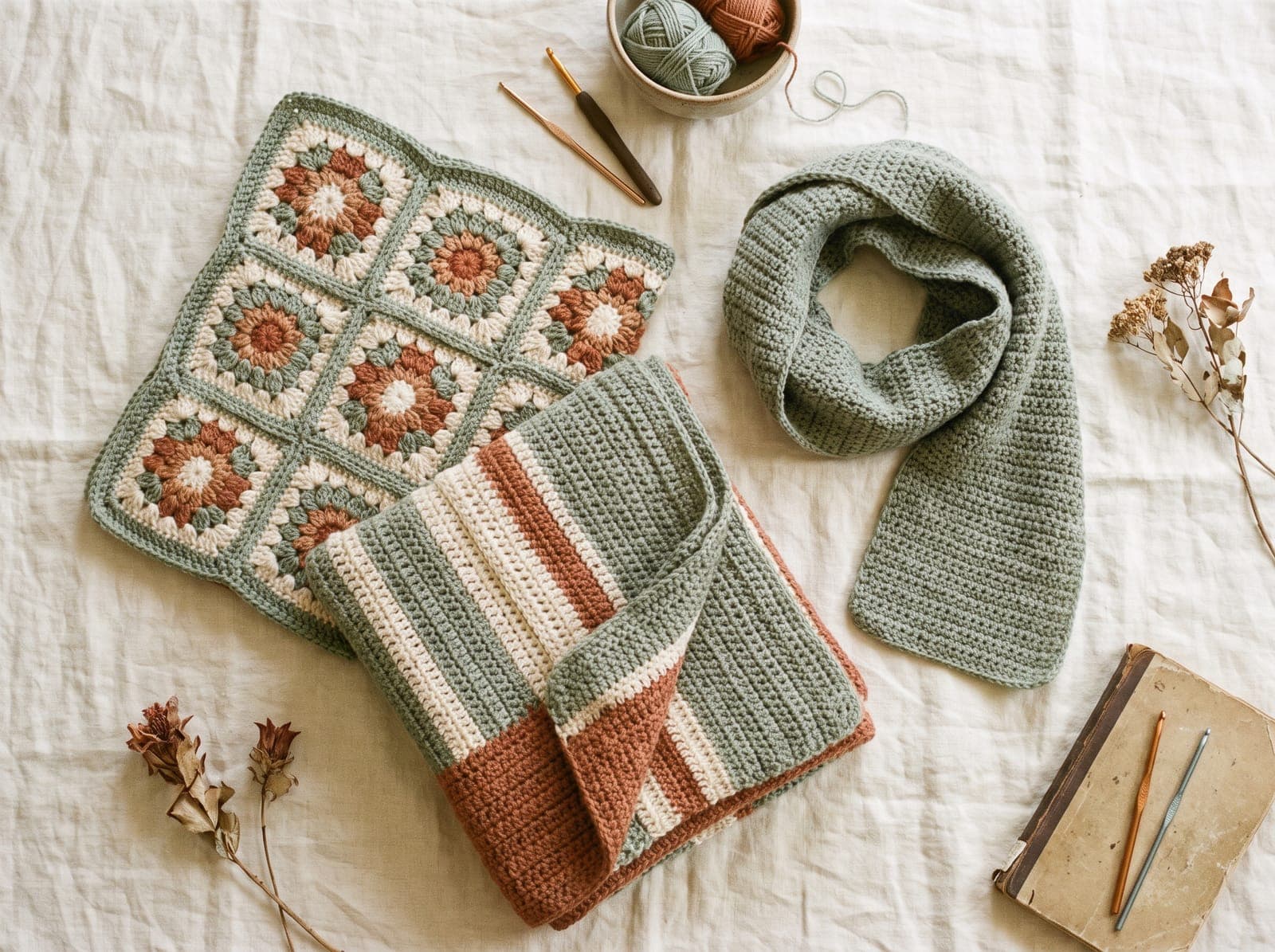
Honestly, most things. Double crochet's tall, quick, slightly open fabric makes it the backbone of a huge range of projects, which is exactly why it earns the “workhorse” nickname:
- Blankets & afghans — fast to work up and wonderfully cozy.
- Granny squares — dc is the granny square stitch. Learn one, make a hundred.
- Cardigans & sweaters — that light drape is perfect for wearables.
- Scarves & shawls — open and airy, great for lacy designs.
- Bags & market totes — the little bit of stretch and give works beautifully.
Time to put it to work — browse our free beginner crochet patterns and pick your next make.
Up next in this guide
Single Crochet
Half Double Crochet