How to Single Crochet: Step-by-Step for Beginners
Updated July 2026 · 5 min read
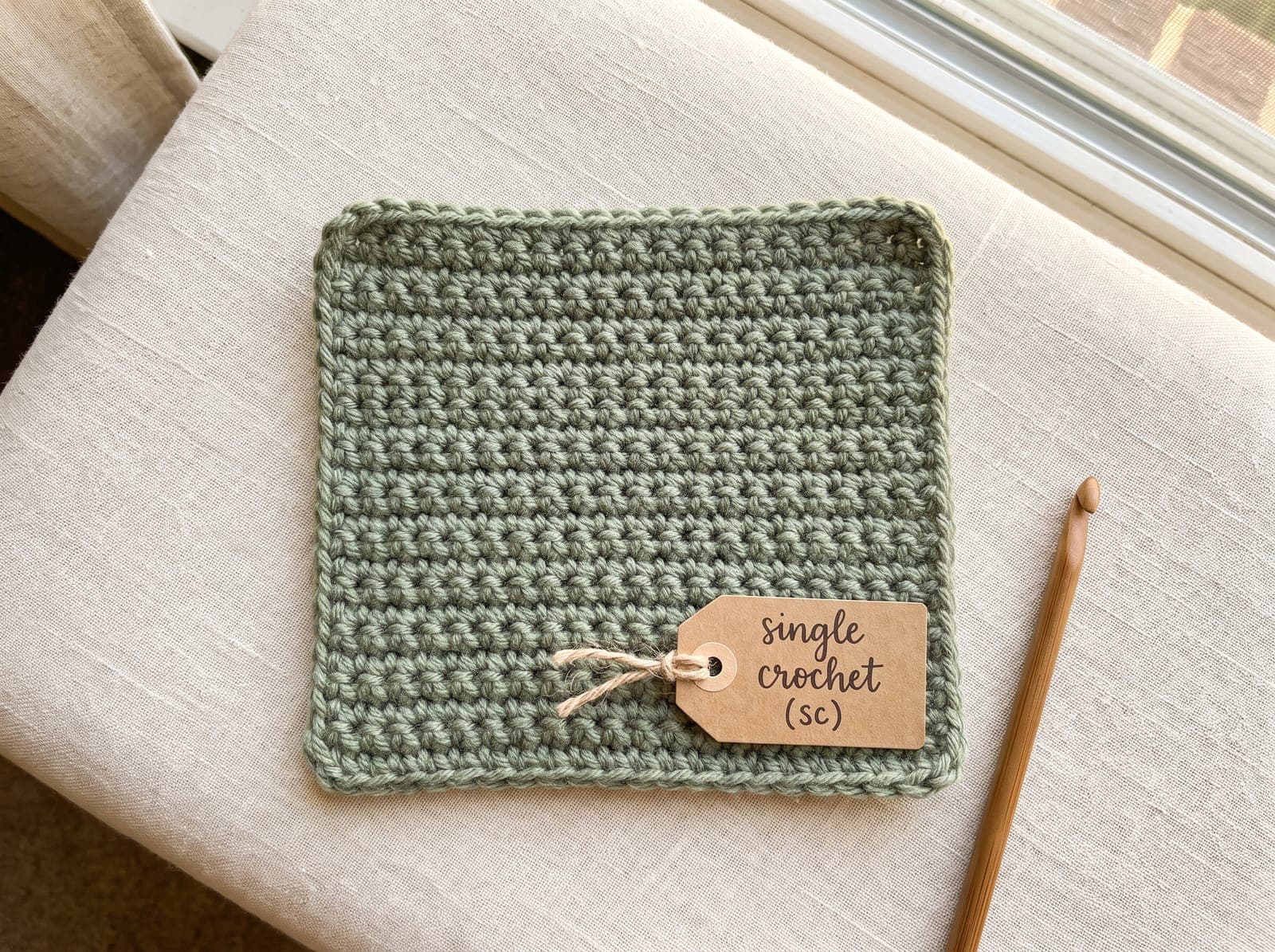
What is single crochet?
Single crochet (abbreviated sc) is the shortest and sturdiest of the basic crochet stitches. To make one, you insert your hook into a stitch, yarn over, pull up a loop so you have two loops on your hook, yarn over again, and pull through both loops. That's one single crochet. It creates a dense, tight fabric and it's the first stitch most beginners learn.
If you're going to learn one crochet stitch, make it this one. Single crochet is the little building block behind a huge share of beginner projects — amigurumi, dishcloths, bags, coasters, anything you want firm and holding its shape.
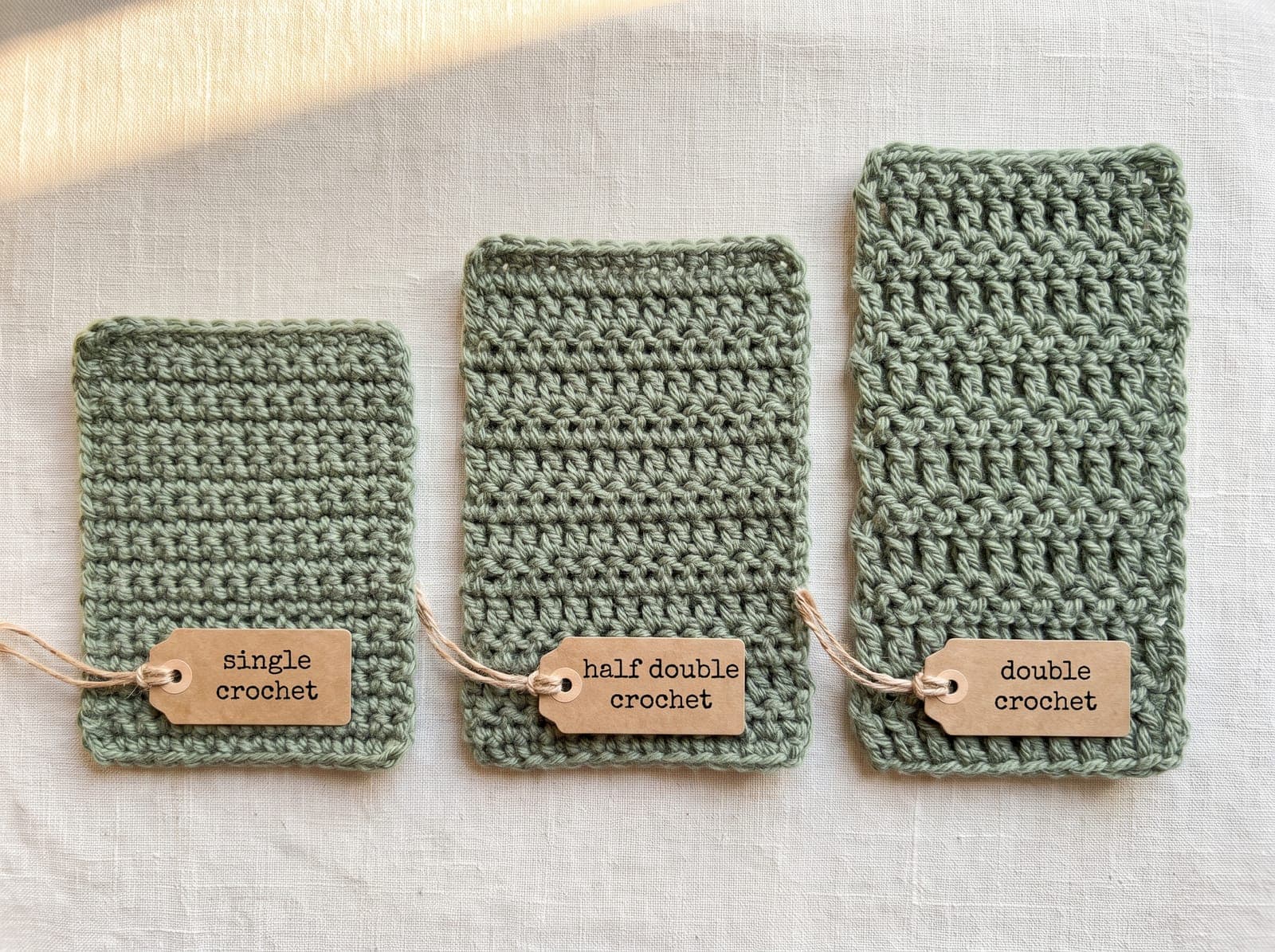
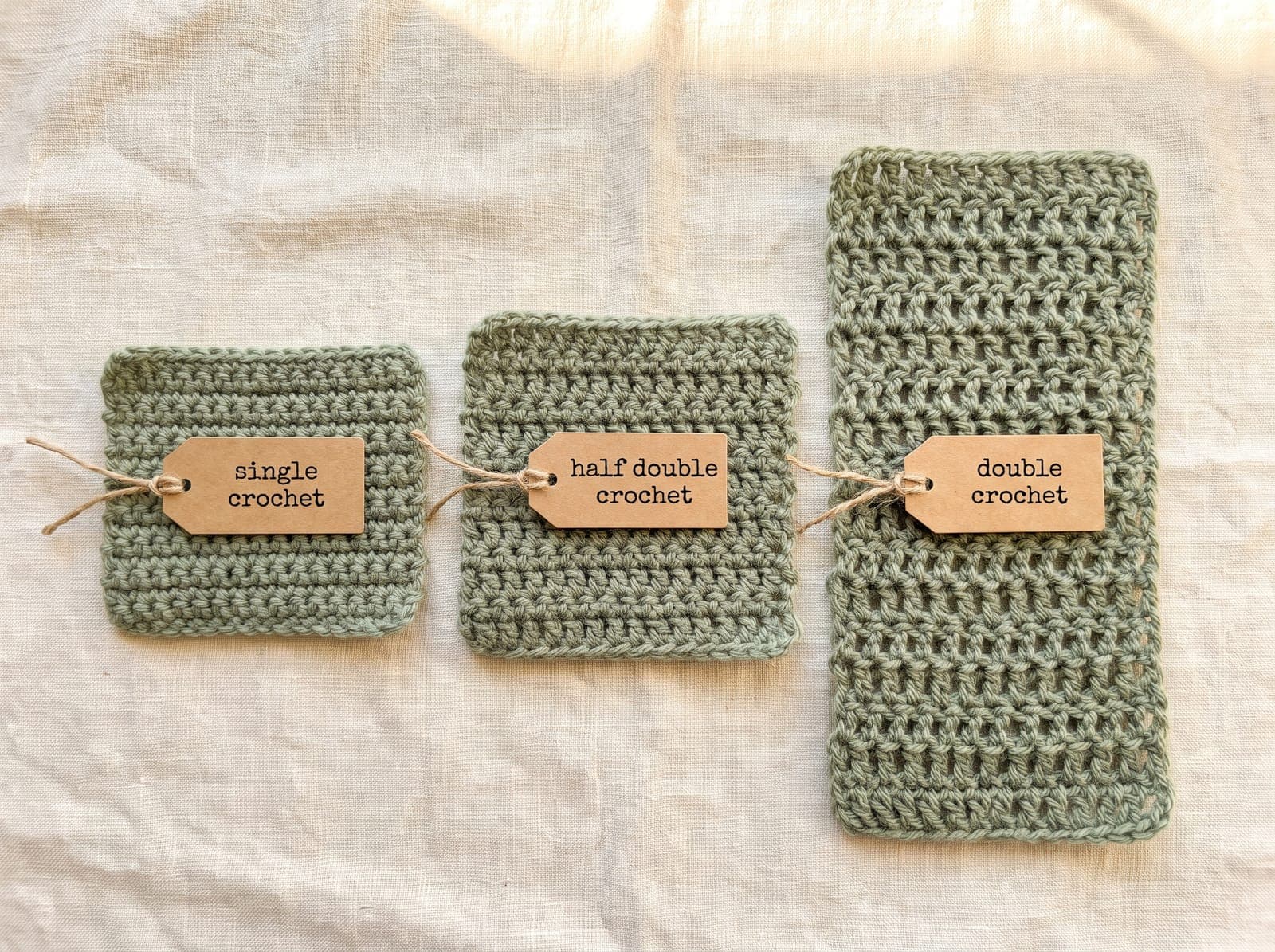
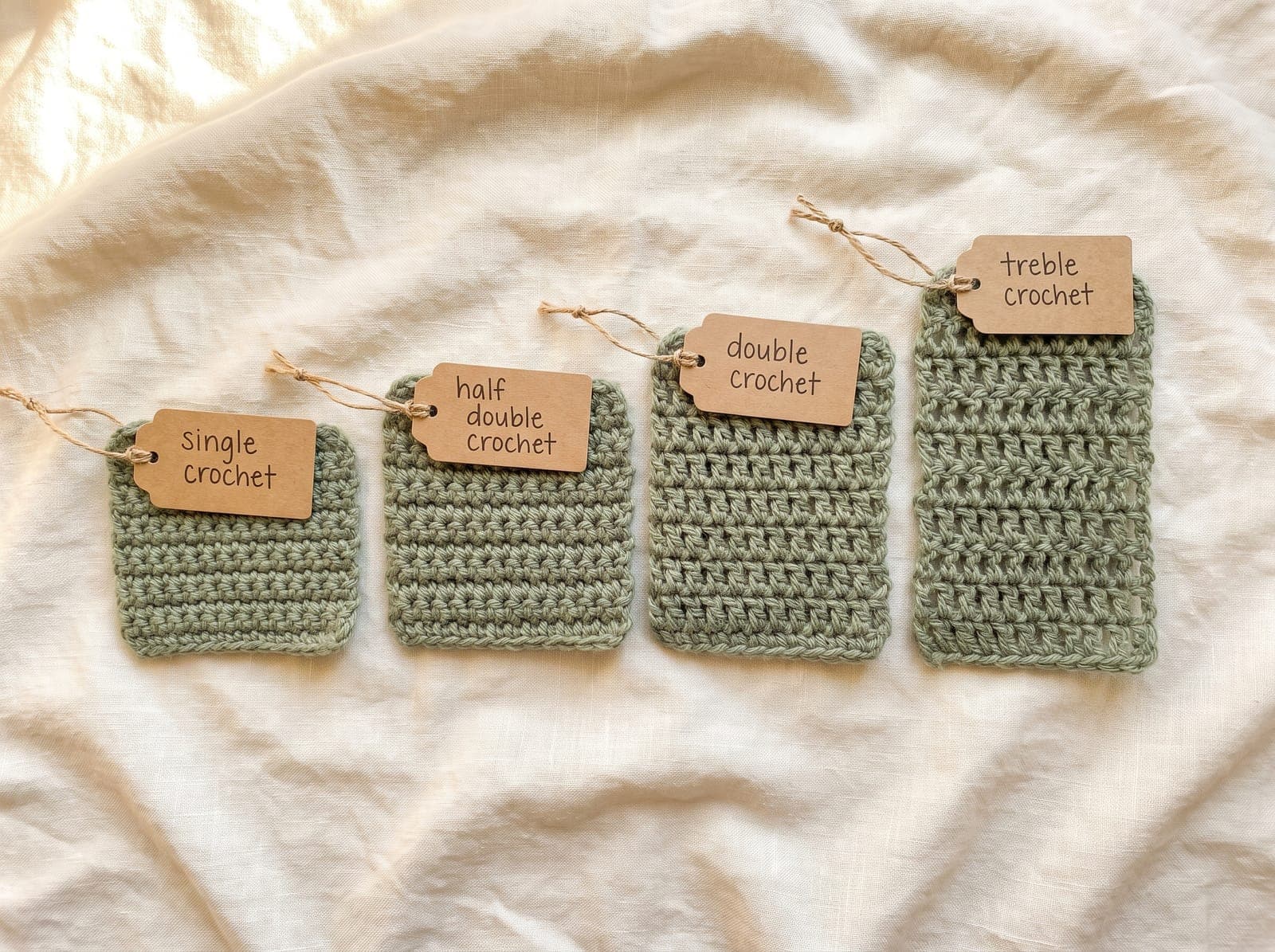
It's short, so your rows are neat and controlled, and it's forgiving, so small mistakes don't shout. Once you can single crochet without thinking about it, the taller stitches (half double, double, treble) are just small upgrades on the same motion.
Ready to make one? First, grab your supplies.
What you'll need
Barely anything. To practice single crochet you only need three things:
| What | Recommended for practice | Why |
|---|---|---|
| Crochet hook | 5.0mm (US H/8) | A comfy mid-size that's easy to control |
| Yarn | Smooth worsted weight, light color | Pale yarn lets you see your stitches |
| Scissors | Any small pair | To cut your yarn at the end |
That's the whole shopping list. Want the full breakdown of hook sizes and yarn weights? See our crochet tools & supplies guide.
Before your first single crochet, you'll need a short foundation chain to work into. If you're brand new, our how to chain guide covers it in seconds — chain about 12 to give yourself room to practice.
How to single crochet, step by step
Here's the whole stitch in five small moves. Work these into the next stitch (or, on your very first row, into the foundation chain — more on that in the next section). Take it slow the first few times; it becomes muscle memory fast.
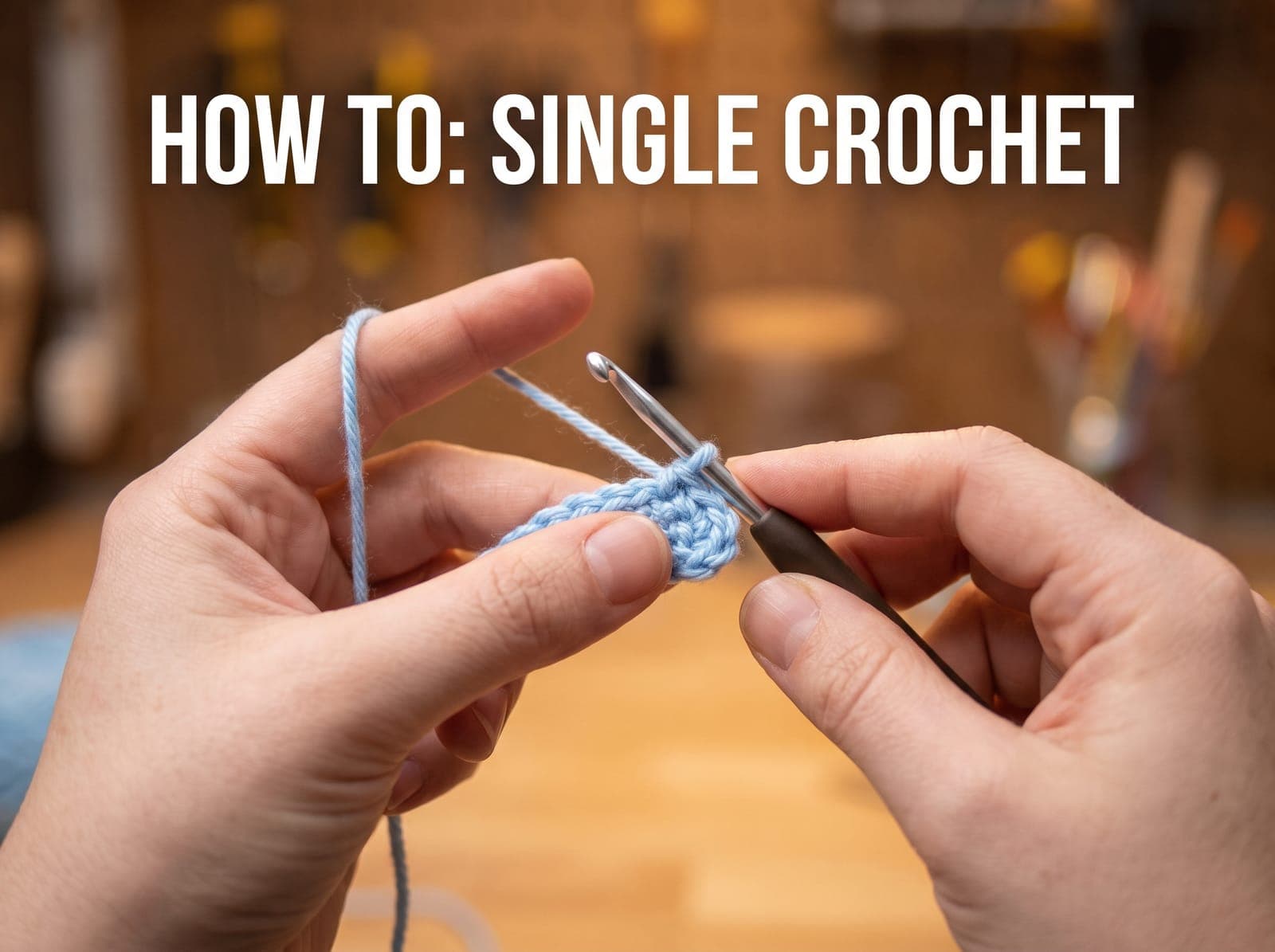 ▶
▶Insert your hook
Push your hook through the next stitch, going under the top two loops (the little "V" on top). You'll now have your working loop on the hook, plus the stitch around it.
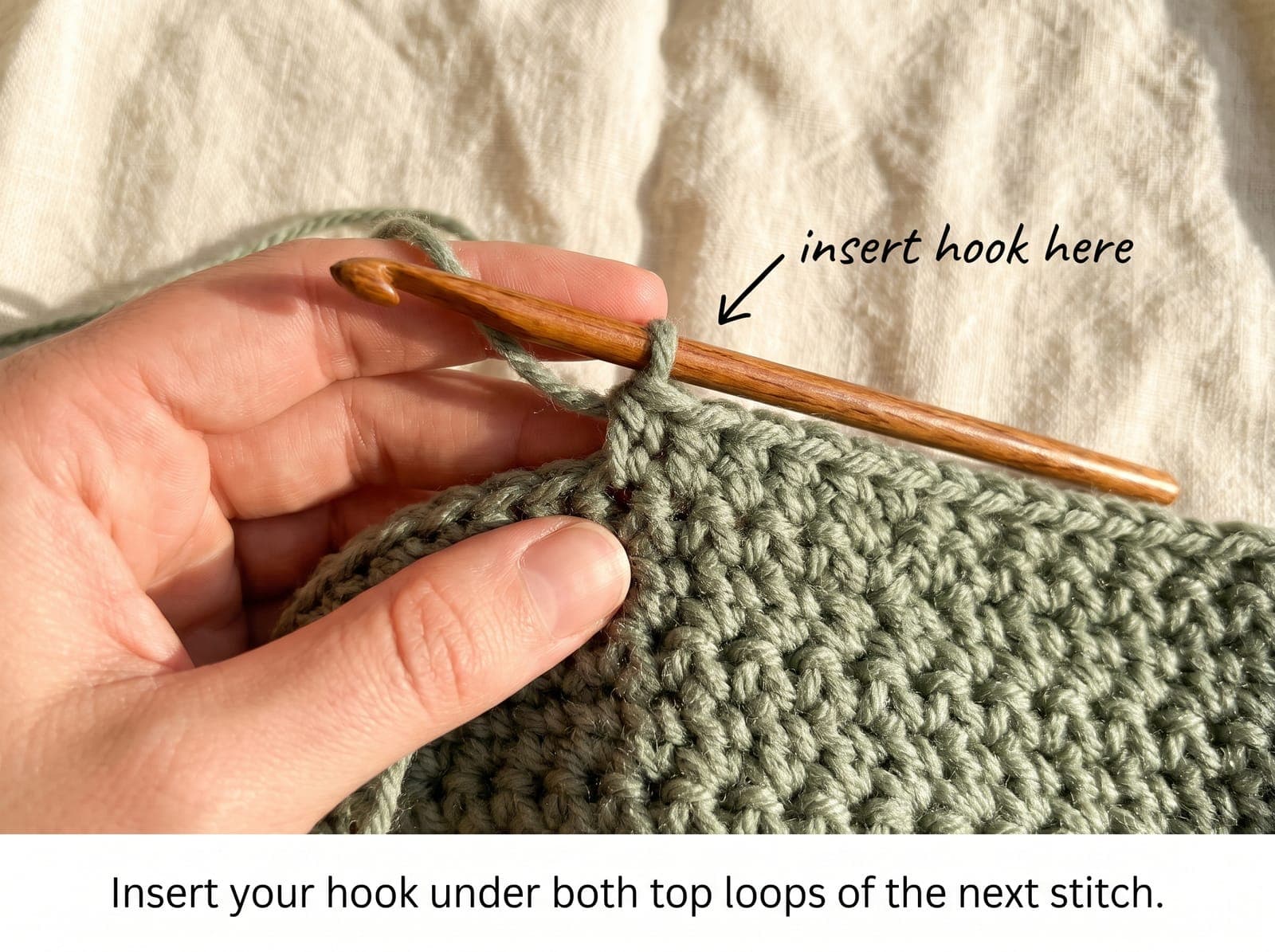
Yarn over
Wrap the yarn over your hook from back to front. This is the "yarn over" you'll hear in every pattern.
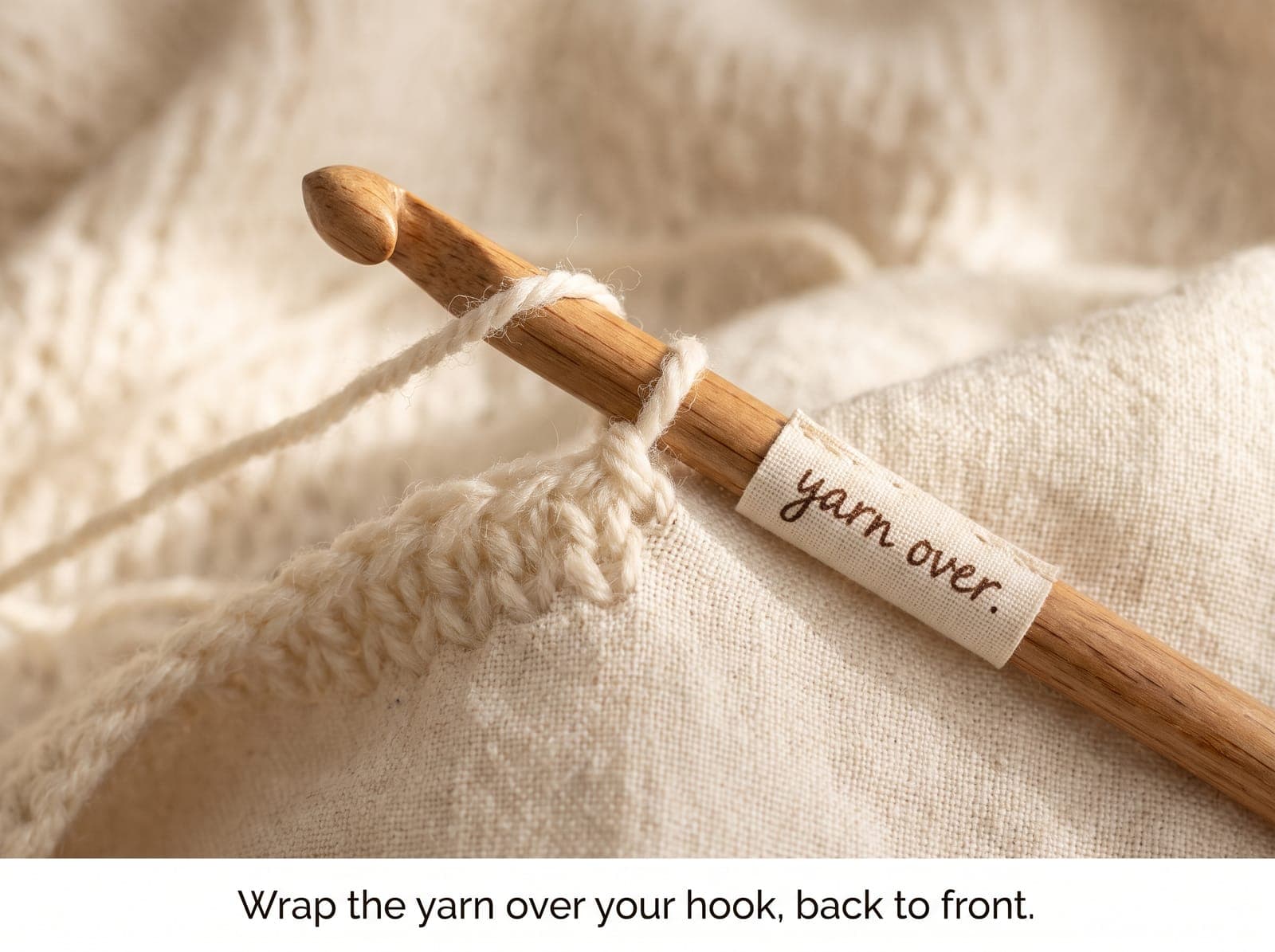
Pull up a loop
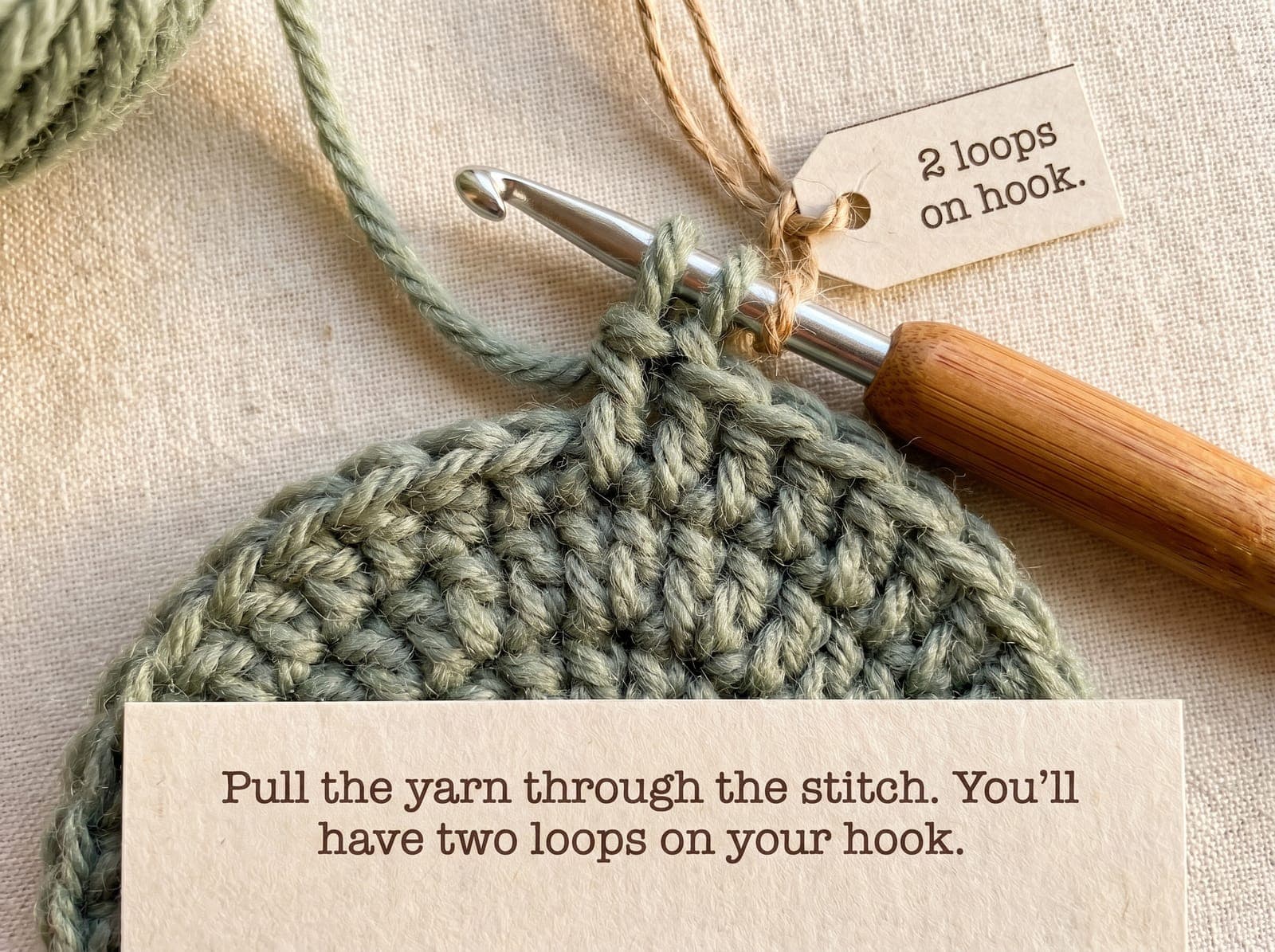
Pull that wrapped yarn back through the stitch only. You should now have two loops on your hook.
Yarn over again
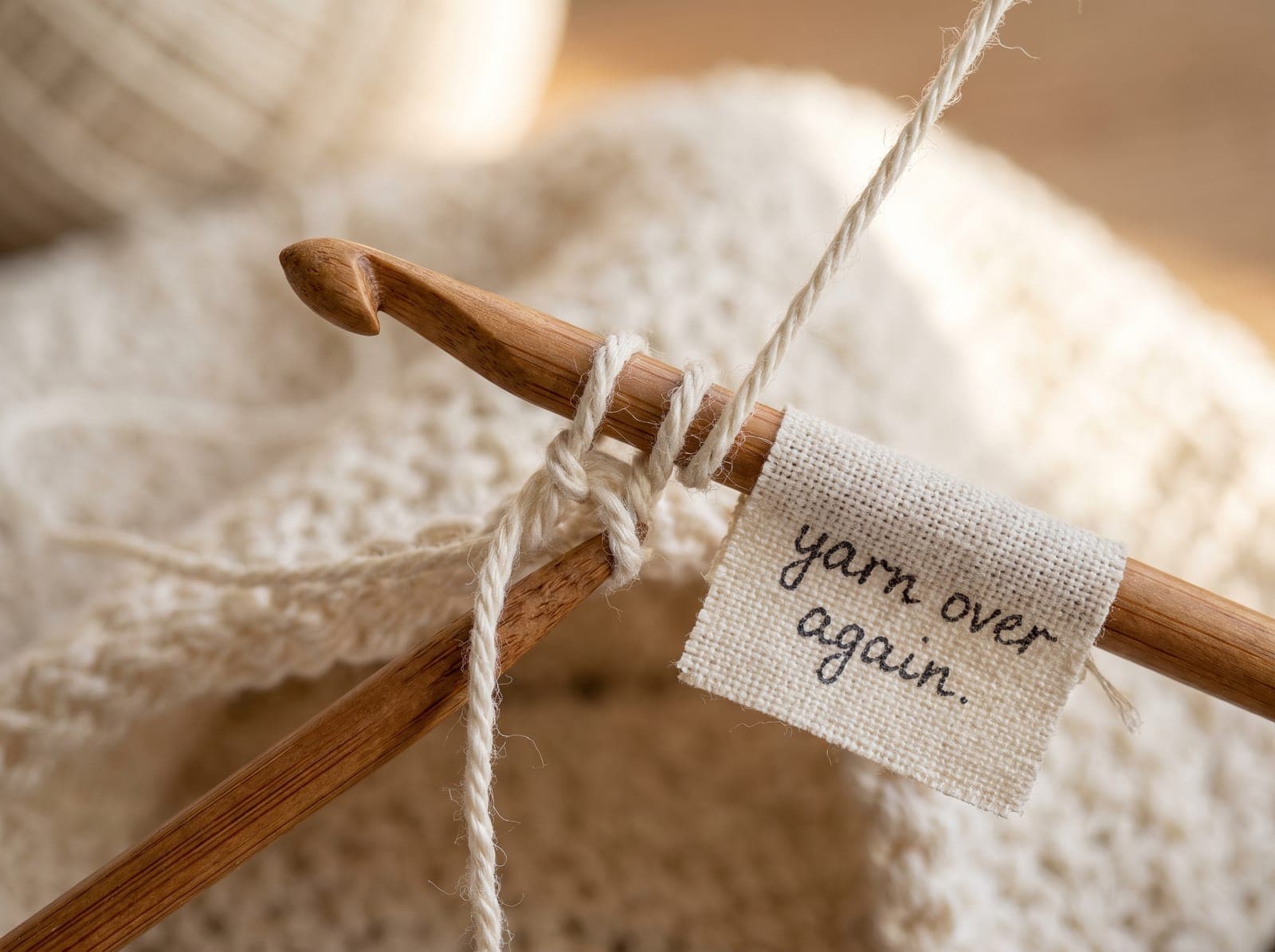
Wrap the yarn over your hook one more time, same motion as before.
Pull through both loops
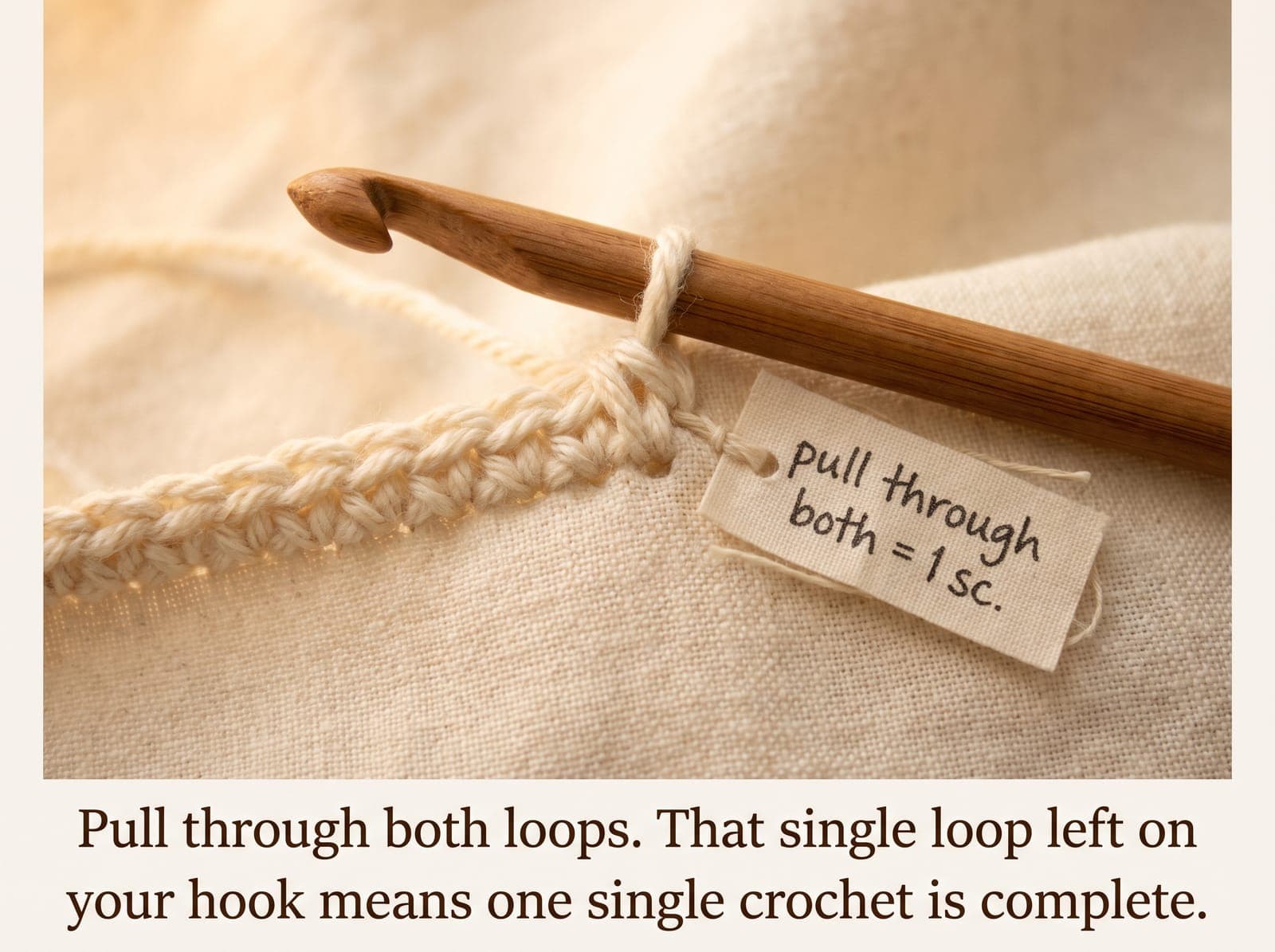
Pull this new wrap through both loops on your hook in one smooth pull. You're left with a single loop on the hook, and that's it: one single crochet made.
Repeat those five steps into each stitch across your row. That rhythm — insert, yarn over, pull up, yarn over, pull through — is single crochet. Say it out loud the first few rows if it helps; before long your hands will do it on autopilot.
Starting your first row (working into the chain)
Here's the bit that trips up almost every beginner: that very first row, worked into your foundation chain, feels awkward and tight. Totally normal. Once you're past row one, it gets easy fast.
- 1Make your foundation chain (about 12 to practice).
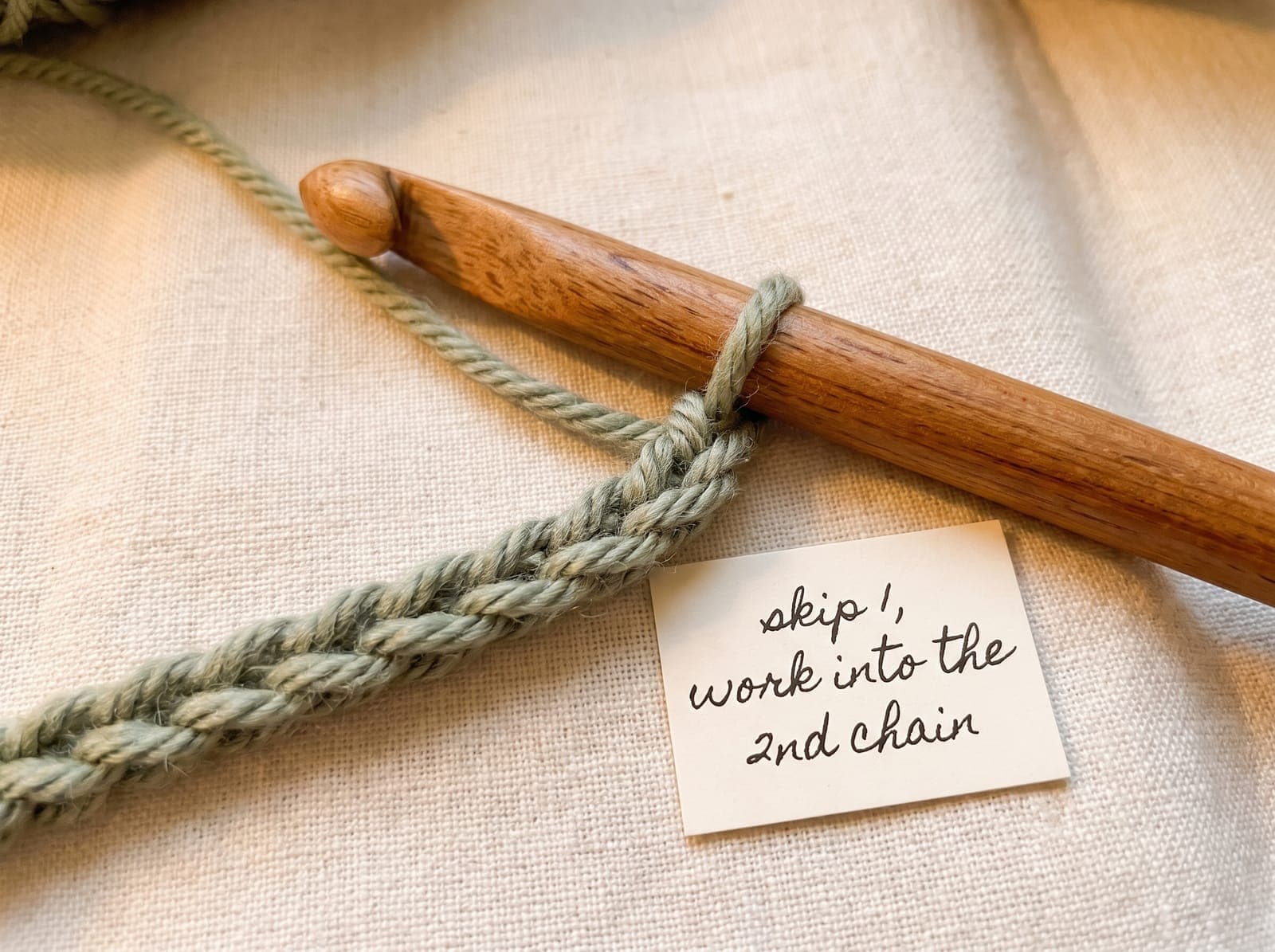
- 2Skip the first chain from your hook.
- 3Insert your hook into the second chain, then work a single crochet (the five steps from above).
- 4Single crochet into each remaining chain, one per stitch, to the end.
| Question | Answer |
|---|---|
| Why skip the first chain? | It acts as a small “turning” space so your edge sits flat. |
| My first row is super tight, help? | Chain a little looser, or go up one hook size for the chain only. |
| How do I know I didn't miss one? | Count your stitches at the end. 12 chains (minus 1 skipped) = 11 single crochets. |
Finished your first row? Turn your work, chain 1, and single crochet back across. That's how single crochet fabric grows, row after row.
Common single crochet mistakes (and how to fix them)
If your first swatch looks a little wonky, you're in good company. Almost every beginner hits the same handful of snags, and every one has an easy fix.
The usual culprit: accidentally skipping the last stitch of a row, or sneaking an extra one in at the turn. Fix: count your stitches at the end of every row. Same number each time = straight edges.
If your hook fights to get into each stitch, you're gripping the yarn too hard. Fix: loosen your tension, or go up a hook size while you learn. Tight comes loose with practice.
Beginners often stitch into the gap between stitches instead of the top "V." Fix: always work under the two loops that form the V on top of each stitch.
For single crochet you chain 1 at the start of a new row, and that chain does not count as a stitch. Fix: chain 1, turn, then work your first sc into the very first stitch — not the one after it.
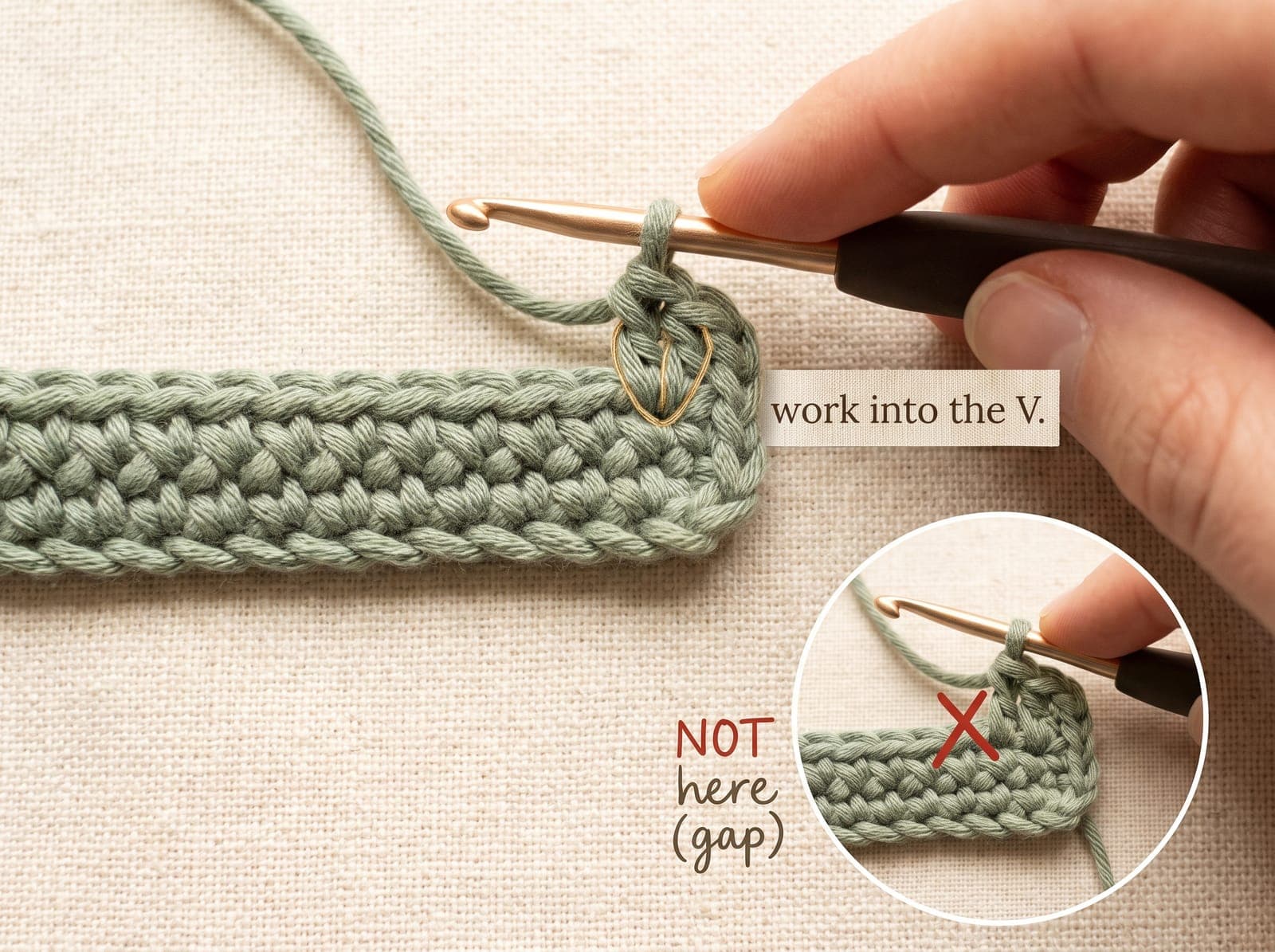
Get past these and your fabric will start coming out neat and even, which brings us to a few habits that make it look really tidy.
Tips for neat, even single crochet
Once the stitch feels natural, these small habits are what take your fabric from “learning” to “looks store-bought.” None of them are hard — they're just easy to forget.
- Keep your tension steady, not tight. Even, relaxed loops look far neater than perfectly tight ones. Consistency beats tightness every time.
- Count every row. A five-second stitch count keeps your edges straight and saves you from frogging (unraveling) later.
- Use a stitch marker on the last stitch. Pop a marker in the final stitch of each row so you never miss it at the turn — the most common cause of shrinking edges.
- Work under both top loops. Unless a pattern says otherwise, going under the full "V" gives the cleanest, most even texture.
- Relax your grip. A tight death-grip on the hook makes tight, uneven stitches. Loosen your hands and your tension follows.
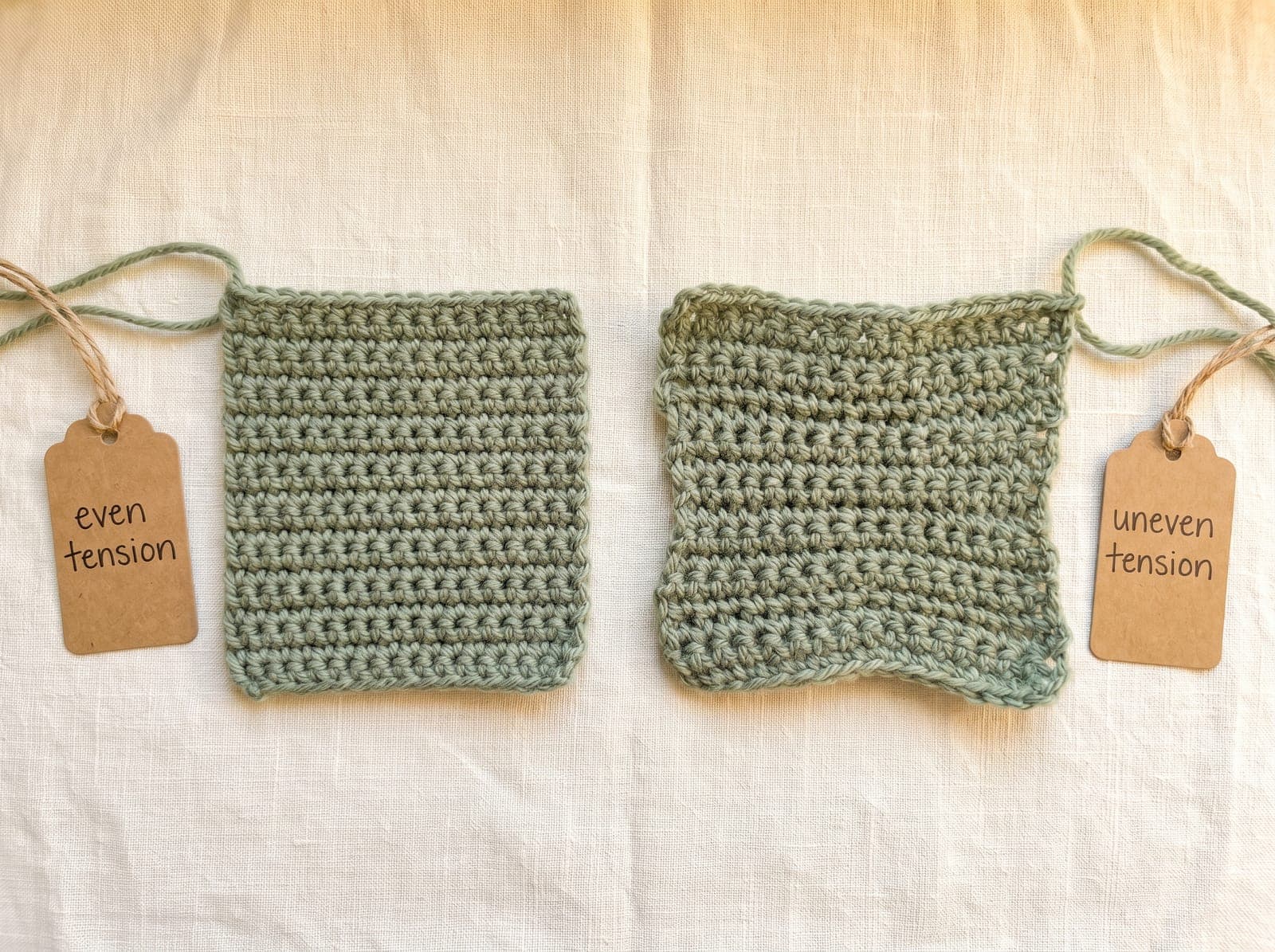
Nail these and you've basically mastered single crochet. So, what can you actually make with it?
What can you make with single crochet?
More than you'd think. Because single crochet makes a firm, tight fabric, it's the go-to stitch anywhere you want structure and durability. Once you've got the stitch down, these are perfect first projects:
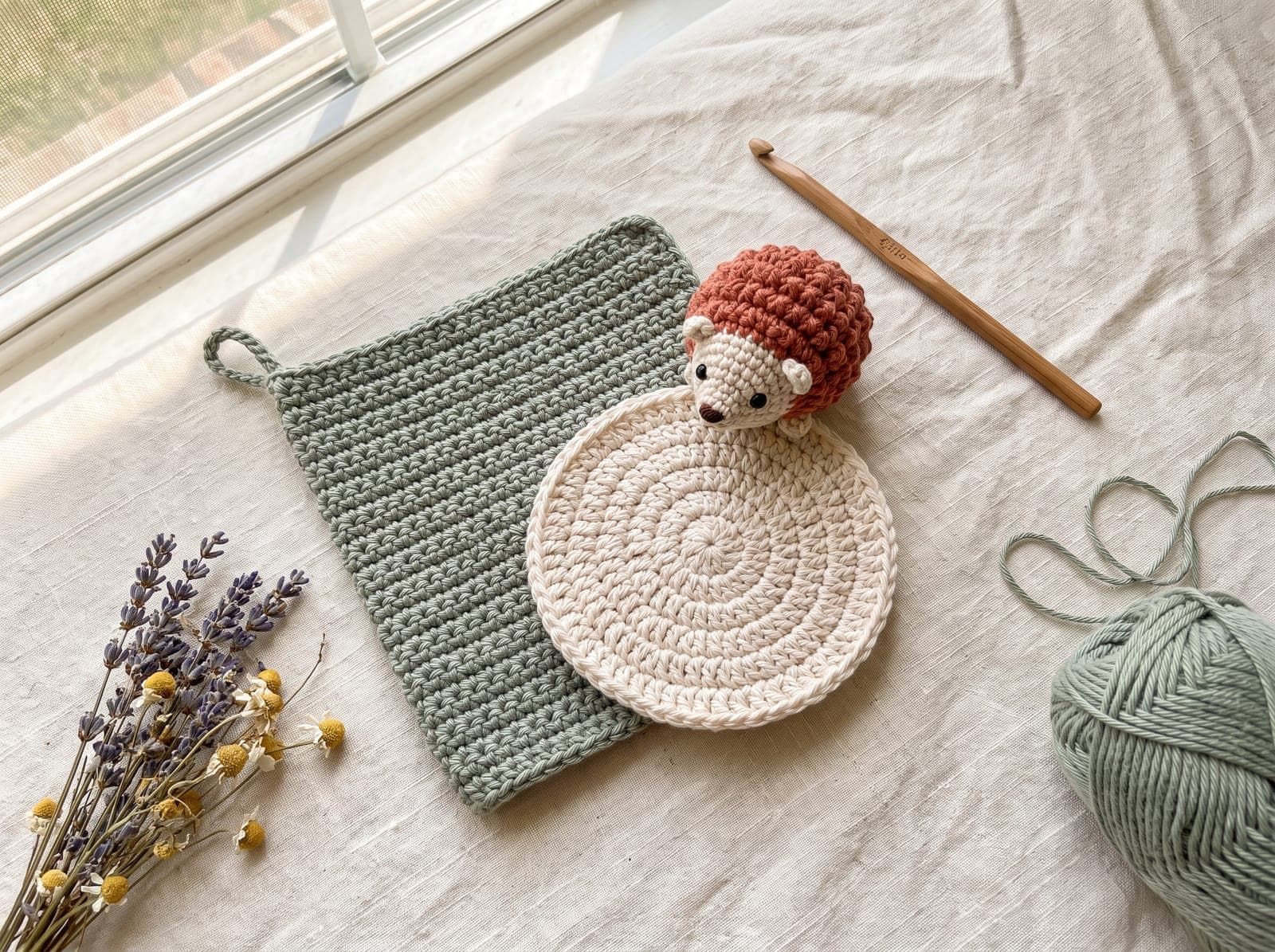
- Washcloths & dishcloths — flat, quick, and endlessly useful. The ideal first finished thing.
- Coasters — a one-evening win that teaches you working in rows or rounds.
- Amigurumi (stuffed toys) — the tight fabric hides the stuffing, which is why nearly all amigurumi is single crochet.
- Bags & baskets — that sturdy fabric holds its shape beautifully.
- Potholders — double the thickness for something genuinely functional.
Ready to make something? Browse our free beginner crochet patterns and put your new stitch to work today.